.png)
Best cleaning supplies for end of lease bond cleans 2026

Best overall: a surface-compatible All-Purpose Cleaner. Best for kitchen grease: a Kitchen Degreaser. Best reusable option: Microfibre Cloths. These are the best cleaning supplies for end of lease preparation in 2026: choose products by surface and task, not by bottle count. Housekept suits households seeking professional end-of-lease cleaning in Sydney, Shoalhaven and Illawarra.
TL;DR
- The best cleaning supplies for end of lease start with an All-Purpose Cleaner suitable for your surfaces.
- Kitchen Degreaser and Bathroom Cleaner handle different bond-cleaning tasks; neither belongs on every surface.
- Microfibre Cloths, a vacuum and a mop support removal rather than covering dirt with fragrance.
- Housekept suits households seeking professional end-of-lease cleaning in Sydney, Shoalhaven and Illawarra.
Why this matters
A bond clean involves more than making rooms smell fresh. You need to remove grease, dust, bathroom deposits and floor dirt without damaging the property. A strong cleaner used on the wrong finish creates another problem instead of solving the first one.
For your 2026 move, use the property's cleaning instructions, tenancy documents and original condition report to organise the work. This guide ranks supply categories by their role in an end-of-lease kit, not individual brands or advertised strength. No cleaning product guarantees a bond refund.
What makes the best end-of-lease cleaning supplies?
- Surface compatibility: The label must permit use on the material and finish you are cleaning. Stone, coated glass, timber and oven interiors need particular care.
- Task fit: Grease needs a different approach from loose dust or mineral deposits. Match the cleaner to the dirt rather than using the strongest bottle everywhere.
- Residue removal: You need a practical way to wipe away dissolved dirt and any cleaner the label says to remove. Fragrance is not evidence of cleanliness.
- Controlled application: A cloth, brush or suitable applicator helps keep liquid away from sockets, electronics, joins and adjacent finishes.
- Safe use: Follow ventilation, protective equipment and handling instructions. Never mix cleaning chemicals, particularly bleach with acids or ammonia.
- Reusable tools: Washable cloths and suitable cleaning heads let you change dirty tools instead of spreading grime between rooms.
End-of-lease cleaning supplies at a glance
For a 2026 bond-cleaning kit, start with the general supplies and add specialist cleaners only for tasks your property actually needs. The ranking below follows that order; an oven product is not a substitute for a floor cleaner.
All-Purpose Cleaner
- Best for: General washable surfaces
- Standout role: Covers everyday wipe-down tasks
- Key limitation: Not suitable for every material or heavy deposit
Microfibre Cloths
- Best for: Reusable wiping and finishing
- Standout role: Lift and carry away loosened dirt
- Key limitation: Dirty cloths spread residue
Kitchen Degreaser
- Best for: Greasy kitchen surfaces
- Standout role: Targets oily buildup
- Key limitation: Compatibility varies by finish
Bathroom Cleaner
- Best for: Soap scum and bathroom deposits
- Standout role: Targets residue a general cleaner leaves behind
- Key limitation: Acidic formulas can damage acid-sensitive surfaces
Glass Cleaner and Squeegee
- Best for: Windows and mirrors
- Standout role: Support clear, low-residue finishing
- Key limitation: Coated glass needs its own care instructions
Oven Cleaner
- Best for: Baked-on oven residue
- Standout role: Targets a specialist kitchen task
- Key limitation: Unsuitable products can damage oven interiors
Vacuum and Detail Brush
- Best for: Dry debris and edges
- Standout role: Remove particles before wet cleaning
- Key limitation: Vacuum attachments need surface checks
Floor Cleaner and Mop
- Best for: Final hard-floor cleaning
- Standout role: Match wet cleaning to the floor finish
- Key limitation: Excess water and unsuitable formulas can damage floors
1. All-Purpose Cleaner: best for general wipe-down tasks
An All-Purpose Cleaner is the default bottle for washable surfaces its label permits. Use it for routine dirt on suitable benches, cupboard fronts and other hard surfaces, then remove residue as directed. It does not replace a dedicated treatment for heavy grease or mineral deposits.
All-Purpose Cleaner pros:
- Covers several general cleaning tasks with the same bottle.
- Lets you keep specialist chemicals for specialist jobs.
- Works with a cloth for controlled application where the label allows it.
All-Purpose Cleaner cons:
- The name does not mean it is safe on every finish.
- General formulas are not always enough for baked-on or established deposits.
Best for: Broad, everyday wipe-down work across compatible surfaces.
Check the label before cleaning painted doors, timber furniture or stone. Test an inconspicuous area and avoid soaking joins or fittings. Buy: choose an All-Purpose Cleaner whose permitted surfaces match your property.
2. Microfibre Cloths: best for reusable wiping and finishing
Microfibre Cloths collect dust and carry away loosened dirt when used appropriately. Keep clean cloths available for finishing, rather than using the same dirty cloth from the bathroom to the kitchen. Follow their washing instructions and the surface's care requirements.
Microfibre Cloths pros:
- Support both dry dusting and damp wiping.
- Let you separate dirty cleaning from final finishing.
- Can be washed and reused according to their care instructions.
Microfibre Cloths cons:
- Embedded grit can scratch a delicate finish.
- A saturated or dirty cloth leaves moisture and residue behind.
Best for: Reusable general cleaning tools, especially cupboard fronts, handles and final wipe-downs.
Assign separate cloths to 3 zones: kitchen, bathroom and general rooms. This is a practical separation system, not a substitute for washing them. Buy: Microfibre Cloths belong in the kit before another specialist spray.
3. Kitchen Degreaser: best for oily kitchen buildup
A Kitchen Degreaser targets greasy residue on surfaces listed on its label. It earns its place when routine wiping leaves an oily film around cooking areas. Remove loose debris first, apply as directed and wipe away the loosened residue.
Kitchen Degreaser pros:
- Targets oily dirt rather than relying on fragrance.
- Adds a focused treatment for greasy cooking areas.
- Supports cleaning before a separate final wipe or rinse.
Kitchen Degreaser cons:
- Some formulas are unsuitable for particular metals, coatings or painted finishes.
- Residue still needs removal; spraying alone does not finish the job.
Best for: Greasy, compatible splashbacks and kitchen surfaces.
A cooktop's material matters as much as its dirt. Glass, enamel and stainless steel do not automatically share the same care instructions. Buy: add Kitchen Degreaser when the kitchen has grease your general cleaner does not remove.
4. Bathroom Cleaner: best for soap scum and mineral deposits
A Bathroom Cleaner should match the deposit you need to remove. Soap scum and mineral deposits are different from loose dust, and the label should identify the intended task. Check both the cleaner and the surface instructions before treating shower screens, tiles, grout or fittings.
Bathroom Cleaner pros:
- Gives bathroom residue a task-specific treatment.
- Helps avoid repeated wiping with an unsuitable general product.
- Provides directions for application, contact time and removal.
Bathroom Cleaner cons:
- Acidic formulas can damage acid-sensitive stone and other finishes.
- A deposit remover does not repair damaged grout or sealant.
Best for: Compatible bathroom surfaces with visible soap scum or mineral buildup.
Do not assume visible mould is simply another deposit to scrub harder. Moisture problems and deteriorated seals need separate attention. Buy: choose Bathroom Cleaner by the deposit and surface, not the word bathroom alone.
5. Glass Cleaner and Squeegee: best for windows and mirrors
Glass Cleaner and a suitable Squeegee help you remove dirt and finish permitted glass surfaces without leaving excess liquid behind. Use clean tools and inspect the result in daylight. Window tracks need separate debris removal; polishing the pane does not clean the surrounding frame.
Glass Cleaner and Squeegee pros:
- Separate glass finishing from general room cleaning.
- A suitable squeegee removes liquid from larger panes.
- Clean finishing cloths help address edges and remaining marks.
Glass Cleaner and Squeegee cons:
- Dirty blades or cloths can leave streaks.
- Coated, tinted or treated glass requires its own cleaning instructions.
Best for: Accessible windows, mirrors and compatible glass surfaces.
Keep a Glass Cleaner away from screens and electronics unless their manufacturers explicitly permit it. Do not improvise access to high windows. Buy: choose Glass Cleaner and Squeegee for permitted glass, not every shiny surface.
6. Oven Cleaner: best for baked-on oven residue
Oven Cleaner is a specialist option, not an automatic purchase. Read the oven's manual first: self-cleaning systems, catalytic liners and other interior finishes have different restrictions. Use a chemical oven product only where the appliance instructions allow it.
Oven Cleaner pros:
- Targets baked-on food and grease in permitted oven areas.
- Provides a separate approach to a demanding kitchen task.
- Gives specific handling and removal directions on the label.
Oven Cleaner cons:
- Some formulas require protective equipment and ventilation.
- Unsuitable application can damage liners, seals or adjacent finishes.
Best for: Compatible oven interiors with residue requiring a permitted specialist cleaner.
Do not extend the product to racks, aluminium parts or the oven door without checking those components separately. Keep chemical cleaners separate from an appliance's self-cleaning cycle. Hold: confirm the oven manual before buying Oven Cleaner.
7. Vacuum and Detail Brush: best for dry debris and edges
A Vacuum and Detail Brush remove loose particles before you introduce moisture. Use suitable attachments for floors, corners and accessible tracks, and check that the brush will not mark the finish. A dry-first approach keeps loose dust out of your wet-cleaning tools.
Vacuum and Detail Brush pros:
- Remove crumbs, hair and dust before wiping or mopping.
- Reach edges that broad cleaning heads miss.
- Reduce the loose debris carried into later cleaning stages.
Vacuum and Detail Brush cons:
- Unsuitable brushes or trapped grit can mark finishes.
- A standard vacuum does not remove every stain or replace carpet treatment.
Best for: Dry preparation across rooms, particularly edges and accessible tracks.
Never use an ordinary dry vacuum to collect liquid. If carpets need more than debris removal, check the property's requirements before selecting equipment or arranging a service. Buy: use a suitable Vacuum and Detail Brush before wet cleaning.
8. Floor Cleaner and Mop: best for the final hard-floor pass
Floor Cleaner and a suitable Mop complete hard-floor cleaning after loose debris has been removed. Choose the formula and moisture level for the specific floor finish. Timber, laminate, vinyl, tile and stone require different checks rather than a universal bucket mixture.
Floor Cleaner and Mop pros:
- Match the final clean to the floor's material.
- Allow controlled wet cleaning with a suitable mop head.
- Provide a separate finishing stage after dusty tasks are complete.
Floor Cleaner and Mop cons:
- Excess water can damage moisture-sensitive floors.
- An unsuitable formula or dirty mop can leave residue.
Best for: The final clean of compatible hard floors.
Follow dilution instructions exactly where dilution is required. Adding more concentrate is not a shortcut to a cleaner floor. Buy: select Floor Cleaner and Mop by the floor finish, then use them last.
How these supplies are ranked
The 2026 order prioritises broad usefulness first, reusable tools second and task-specific treatments next. Surface compatibility, dirt removal, controlled application and safe handling carry more weight than scent or a claim of extra strength. Specialist supplies earn a place only when the property has the matching task.
Put the kit to work in the right order
Your 2026 cleaning plan should follow the work, not the order bottles sit in a cupboard. Use this sequence to keep finished areas away from the mess created by later tasks.
Check surfaces
Read product labels and appliance instructions before opening bottles. Compare the cleaning list with the property's condition report, and identify surfaces that need a different approach. Keep packaging available throughout the job.
Remove debris
Dust and vacuum before wet cleaning. Work on accessible high surfaces before lower ones, and remove grit before rubbing a finish. Empty or change dirty tools according to their instructions.
Treat buildup
Apply suitable specialist cleaners only to their intended surfaces. Follow the labelled contact time; do not invent a longer soak or let a product dry when its instructions prohibit that. Never layer different chemicals over each other.
Wipe residue
Remove loosened dirt and cleaner as directed. Use 2 separate cloths for this stage where appropriate: one for the dirty wipe and one clean cloth for finishing. Change either cloth when it becomes dirty.
Finish floors
Clean hard floors after the other messy tasks are complete. Check corners, doorways and the area beneath movable items you can safely handle. Photograph the finished rooms and any existing damage for your own records.
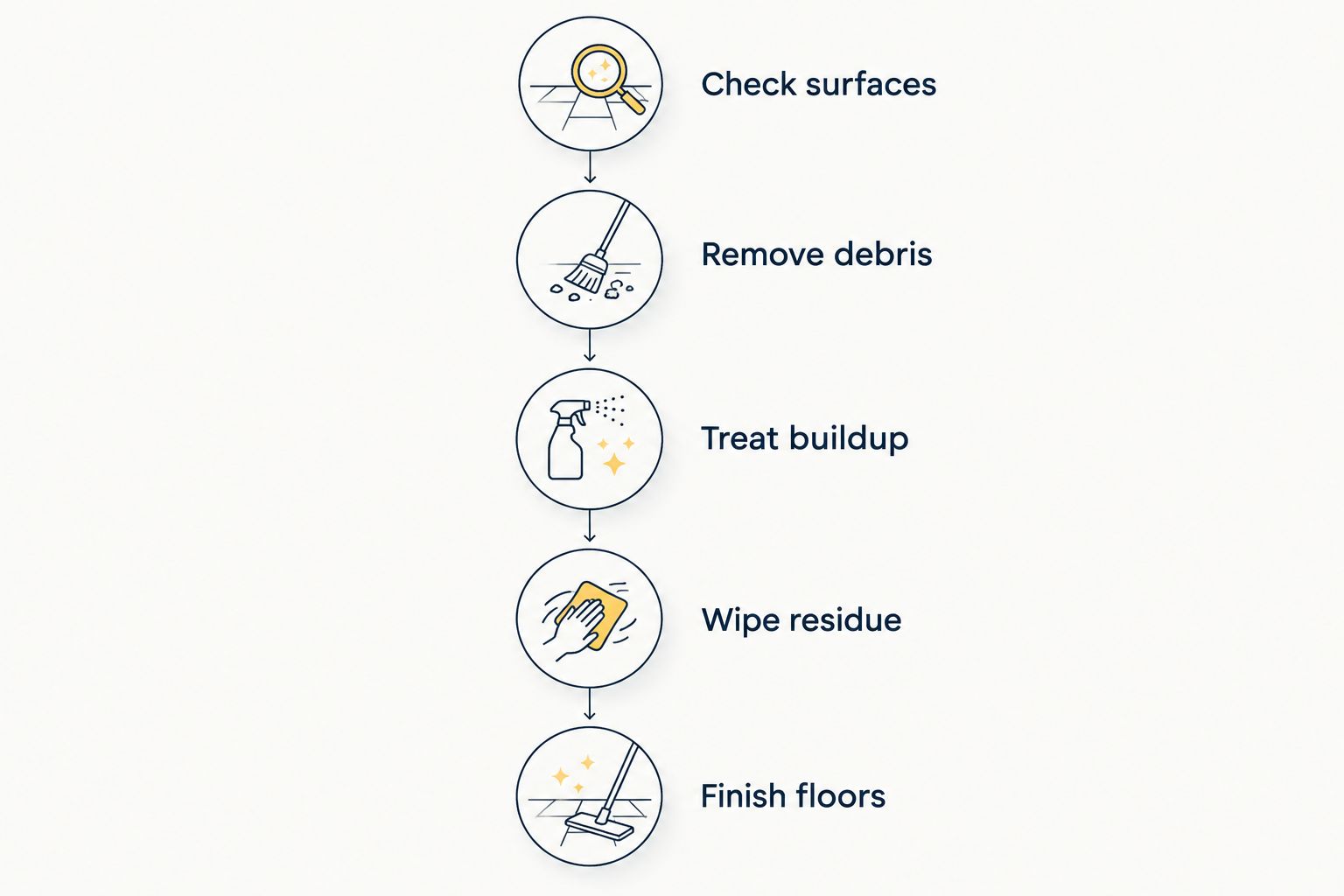
Remove loose dirt before wet cleaning, and leave floors until the messy tasks are complete.
Which end-of-lease cleaning supplies should you choose?
Start with an All-Purpose Cleaner, Microfibre Cloths, a suitable Vacuum and Detail Brush, and the right Floor Cleaner and Mop. Add Kitchen Degreaser, Bathroom Cleaner, glass tools or Oven Cleaner only after checking the actual condition and surface instructions.
For 2026 bookings, Housekept provides end-of-lease cleaning across Sydney, Shoalhaven and Illawarra. Professional cleaning is a separate option from buying supplies; decide which tasks you will handle before purchasing a full kit. Confirm the required work rather than assuming a service or product covers everything.
Arrange your end-of-lease clean
Housekept provides end-of-lease cleaning across Sydney, Shoalhaven and Illawarra.
FAQ
What's the best cleaning supply for an end-of-lease clean?
An All-Purpose Cleaner suitable for the property's surfaces is the best starting bottle for general end-of-lease cleaning. Add specialist cleaners for grease, bathroom deposits or oven residue only where needed and permitted.
Do I need a separate kitchen degreaser?
You need a Kitchen Degreaser when compatible kitchen surfaces have oily buildup your general cleaner does not remove. Check the label against the surface finish and remove the cleaner as directed.
Can I use bathroom cleaner on natural stone?
Use Bathroom Cleaner on natural stone only when both the product label and the stone's care instructions permit it. Acidic products can damage acid-sensitive stone, including marble.
Can I use chemical oven cleaner in a self-cleaning oven?
Use chemical Oven Cleaner only if the oven manufacturer's instructions permit it. Do not assume a product is suitable for self-cleaning ovens, catalytic liners, seals or every removable component.
Should I vacuum or mop first for a bond clean?
Vacuum suitable floors before mopping so loose grit, hair and dust are removed first. Match the mop, cleaner and moisture level to the floor's care instructions.
Will buying these supplies guarantee my bond back?
No cleaning supply guarantees a bond refund. Use the tenancy documents and condition report to organise cleaning, and address any separate damage or tenancy issues through the appropriate process.
Does Housekept provide end-of-lease cleaning?
Housekept provides end-of-lease cleaning across Sydney, Shoalhaven and Illawarra. Confirm the work required for your property before arranging the service.
One last thing
Before your final inspection, put the sprays away and check surfaces after they have dried. Look along glass in daylight, inspect cupboard edges and check floors for residue. A clean cloth and a careful final check are more useful than another application of the wrong chemical.