.png)
Best soap scum removers compared 2026
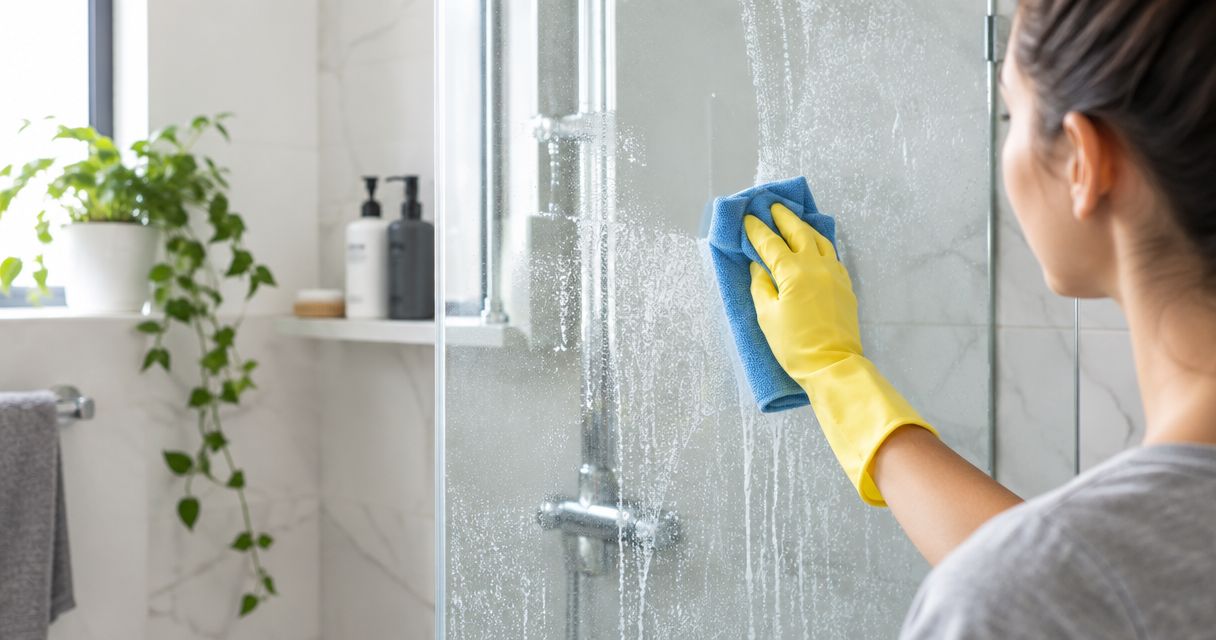
Best overall: a bathroom cleaner explicitly labelled for soap scum and your surface. Best for gentle maintenance: mild dishwashing detergent. Best for mineral haze on acid-safe glass: white vinegar. This 2026 comparison explains which option to use, where it belongs, and when to stop scrubbing.
TL;DR
- The best soap scum remover is a labelled bathroom cleaner that matches your shower surface.
- Mild dishwashing detergent suits light residue and gentle maintenance, not stubborn mineral deposits.
- White vinegar belongs only on acid-safe surfaces; keep it off marble, limestone and acid-sensitive finishes.
- Housekept provides home-cleaning services across Sydney, Shoalhaven and Illawarra for households that prefer professional help.
Why this matters
Soap scum is not simply loose dirt. Soap reacts with minerals in water to form deposits that cling to shower walls, screens and fittings. Body oils and other bathroom residue can sit alongside that build-up, so one cleaning method does not suit every mark.
Choose by surface first, residue second. A cleaner that removes a cloudy deposit can also damage the material underneath. If you prefer a service to a cupboard full of products, Housekept provides home-cleaning services across Sydney, Shoalhaven and Illawarra.
What makes the best soap scum remover?
For this 2026 guide, the strongest choice is the one that removes the relevant residue without requiring you to disregard its label or your surface-care instructions.
- Surface compatibility: The cleaner must suit the screen, tile, grout, tray and fittings it will touch. Check neighbouring surfaces too.
- Residue match: A soap-scum claim matters more than a general promise to make a bathroom shine. Mineral haze and greasy residue need different approaches.
- Clear instructions: Look for directions covering application, contact time, rinsing, ventilation and protective equipment.
- Controlled abrasion: Start without abrasive powders or aggressive pads. Physical force is not a substitute for a compatible cleaner.
- Manageable application: You need to keep the product on the intended area, away from unsuitable finishes, and rinse it as directed.
- A clear stopping point: Repeated treatment is not the answer to etched glass, damaged coatings or worn finishes.
Best soap scum removers at a glance
These options occupy different jobs. The order reflects a practical decision path, not a claim that every bathroom needs every treatment.
1. Labelled bathroom soap-scum cleaner
- Best for: Established soap scum on compatible surfaces
- Standout feature: Directions specifically address bathroom deposits
- Key limitation: Formulations differ; surface approval is essential
2. Mild dishwashing detergent
- Best for: Light residue and gentle maintenance
- Standout feature: Helps lift oily residue without an acid treatment
- Key limitation: Does not target mineral scale
3. White vinegar
- Best for: Mineral haze on acid-safe, uncoated glass
- Standout feature: Acidity helps dissolve susceptible mineral deposits
- Key limitation: Unsuitable for natural stone and other acid-sensitive materials
4. Surface-approved non-scratch pad
- Best for: Localised residue on durable glazed ceramic
- Standout feature: Adds controlled mechanical cleaning
- Key limitation: Compatibility depends on both the pad and the surface
1. Labelled bathroom soap-scum cleaner: best for established build-up
A bathroom cleaner that explicitly names soap scum is the default choice for established deposits. Its label should explain where it belongs and how to apply it. Choose the formulation for your bathroom materials, not the strongest-looking wording on the bottle.
A tiled shower contains more than tiles. Cleaner can run onto grout, sealant, metal fittings and the shower tray, so check those materials before treating a large area.
Labelled bathroom soap-scum cleaner pros:
- Gives you a defined cleaning purpose rather than a vague general-use claim.
- Provides product-specific application and rinsing instructions.
- Lets you choose a formulation approved for the affected surface.
- Can reduce reliance on forceful scrubbing when used as directed.
Labelled bathroom soap-scum cleaner cons:
- Products in this category are not interchangeable across bathroom materials.
- Some formulations require extra care around fumes, splashes and sensitive finishes.
- A soap-scum remover does not repair etched glass or damaged surfaces.
Best for: Established soap scum on a surface explicitly approved by the product label.
Apply the product exactly as directed. Do not extend the contact time because the residue looks stubborn, and do not let the cleaner dry unless the instructions permit it. Rinse as required before judging the result.
Verdict: Buy a labelled soap-scum cleaner when its surface instructions match your bathroom. Skip anything that leaves compatibility unclear.
2. Mild dishwashing detergent: best for gentle maintenance
Mild dishwashing detergent helps loosen oily residue and light surface grime. Use it with water and a soft cloth on materials whose care instructions permit it. Rinse thoroughly so you do not replace bathroom residue with detergent residue.
This is the maintenance option, not the answer to every cloudy screen. If a mineral deposit remains after the oily film lifts, stronger scrubbing with detergent does not change what detergent is designed to do.
Mild dishwashing detergent pros:
- Suits routine removal of light oily residue on compatible surfaces.
- Works with a soft cloth rather than an abrasive tool.
- Offers a simple starting point before selecting a specialist treatment.
Mild dishwashing detergent cons:
- Does not target mineral scale.
- Needs thorough rinsing to avoid a remaining film.
- Still requires approval for delicate coatings and finishes.
Best for: Light residue between deeper bathroom cleans, where the surface-care instructions allow mild detergent.
Treat this as a first pass. Clean a small area, rinse it, then inspect the dry surface. A remaining chalky patch calls for a different residue assessment, not another generous squeeze of detergent.
Verdict: Buy mild dishwashing detergent for gentle maintenance. Skip it as your sole treatment for established mineral deposits.
3. White vinegar: best for mineral haze on acid-safe glass
White vinegar is acidic, which makes it useful against susceptible mineral deposits. That does not make it a universal shower cleaner. Use it only where the surface manufacturer permits an acidic treatment, including any coating on the glass.
Keep white vinegar away from marble, limestone and other acid-sensitive materials. Also check grout, metal finishes and nearby stone before applying it to a screen: runoff matters as much as the spot you intend to clean.
White vinegar pros:
- Targets mineral deposits that a detergent wash does not address.
- Offers a distinct treatment for compatible glass with mineral haze.
- Can be applied locally rather than across an entire bathroom.
White vinegar cons:
- Can etch acid-sensitive natural stone.
- Is unsuitable for surfaces or coatings that prohibit acidic cleaners.
- Does not replace detergent for every oily or mixed deposit.
Best for: Mineral haze on acid-safe, uncoated glass, with compatible surrounding materials.
Never mix vinegar with bleach. Do not combine vinegar with another bathroom cleaner or apply it over unrinsed product residue. Mixing cleaning products introduces risks without giving you a reliable cleaning method.
Verdict: Buy white vinegar only for confirmed acid-safe surfaces. Skip it on natural stone and any finish with uncertain acid compatibility.
4. Surface-approved non-scratch pad: best for localised ceramic residue
A non-scratch pad is a cleaning tool, not a chemical remover. It adds mechanical action when residue remains on a durable surface approved for that pad. Pair it only with a compatible cleaning product and follow both sets of instructions.
The words non-scratch are not blanket permission. A pad suitable for glazed ceramic is not automatically suitable for coated glass, polished stone, acrylic or decorative metal.
Surface-approved non-scratch pad pros:
- Lets you work on a localised patch rather than repeatedly treating the whole shower.
- Adds mechanical cleaning where a soft cloth is insufficient.
- Gives you control over where you apply pressure.
Surface-approved non-scratch pad cons:
- Can mark unsuitable surfaces despite its product description.
- Does not dissolve mineral deposits by itself.
- Excessive pressure can damage finishes or disturb vulnerable joints.
Best for: Localised residue on durable glazed ceramic that is explicitly compatible with the pad.
Test an inconspicuous area first. If the finish becomes dull, marked or rough, stop rather than switching to a more aggressive pad. Avoid steel wool and improvised scraping on delicate bathroom surfaces.
Verdict: Buy a surface-approved pad for a specific ceramic cleaning job. Skip it as an all-purpose shower-screen tool.
How to choose and use your remover
Before your next bathroom clean in 2026, make 3 checks: identify the surface, identify the residue, and read the treatment instructions. These checks determine the method; the appearance of the bottle does not.
Surface check
Confirm what you are cleaning: glass, coated glass, glazed ceramic, natural stone, acrylic or metal. Read the surface-care guidance. Include anything that splashes or runoff will reach.
Residue check
Look for the difference between a greasy film and a chalky mineral deposit. Mixed residue can require separate cleaning stages, with thorough rinsing between them. Do not assume every cloudy mark is removable build-up.
Label check
Match the treatment to both the residue and the surface. Follow ventilation, glove, application and rinsing instructions. Never substitute an internet contact time for the product's directions.
Spot test
Start with 1 small test area in an inconspicuous position. Complete the instructed process, rinse and inspect the dry finish before expanding the treatment.
Rinse and dry
Keep 2 separate cloths ready: one for cleaning and one for drying after rinsing. Drying helps you see what remains instead of mistaking a wet surface for a clean result.
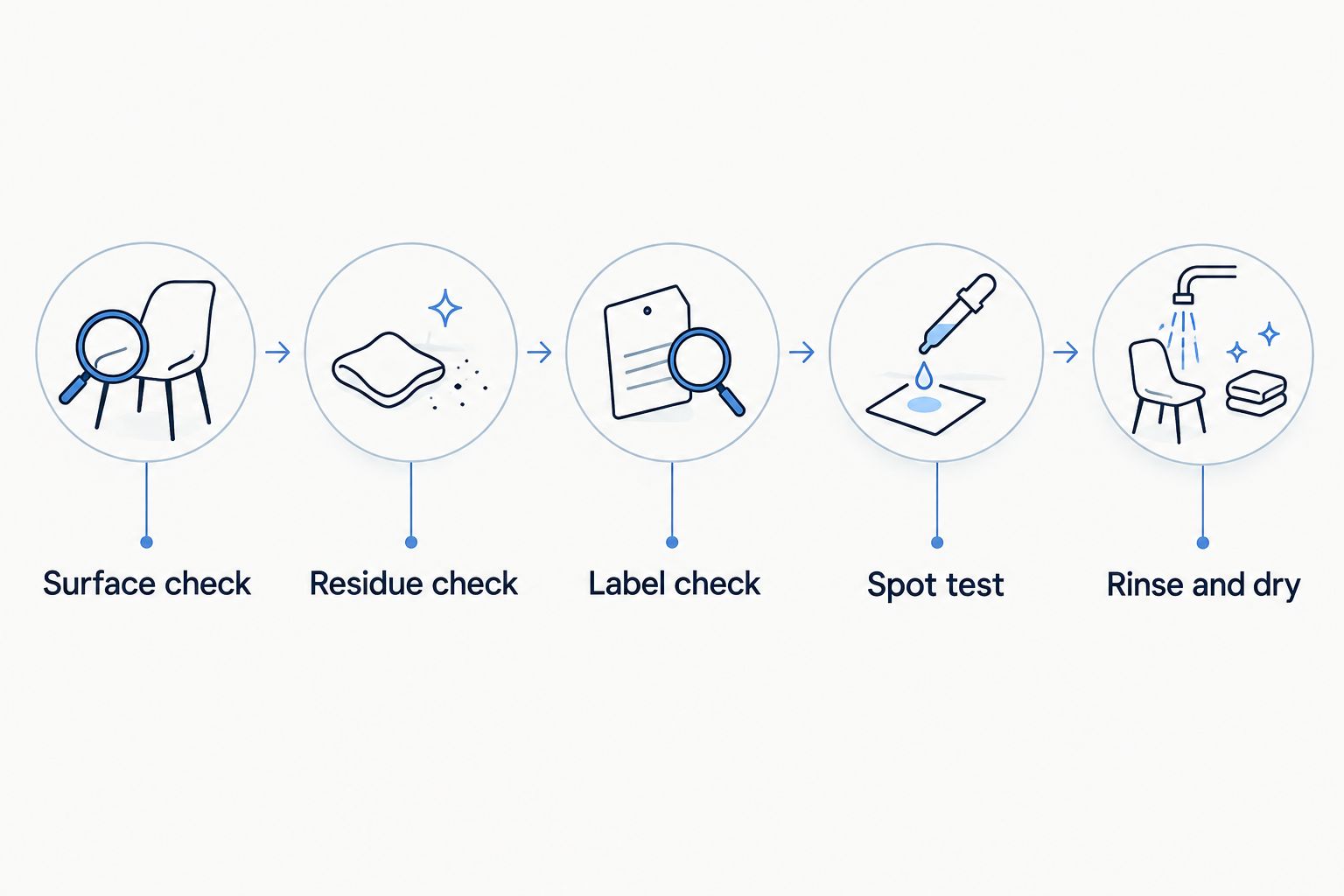
Check the surface before choosing the treatment, then inspect the result after rinsing and drying.
How this 2026 ranking works
The ranking prioritises surface compatibility, residue match, clear directions and controlled abrasion. A labelled soap-scum cleaner comes first because it gives you a purpose-specific treatment; detergent, vinegar and a pad each fill a narrower role.
This is a comparison of cleaning approaches, not a laboratory performance league table. No option wins when its instructions conflict with the surface it will touch.
Which soap scum remover should you choose?
For most DIY decisions, start with a bathroom cleaner explicitly labelled for soap scum and approved for your surface. Choose mild dishwashing detergent for light maintenance, white vinegar only for acid-safe mineral deposits, and a compatible pad only when controlled mechanical cleaning is appropriate.
Housekept is the service option for households in Sydney, Shoalhaven and Illawarra that want home cleaning rather than DIY. Describe the affected surfaces and the residue when discussing the job; do not assume every cleaning service includes specialist stone restoration or glass repair.
For a 2026 bathroom-cleaning routine, the useful change is simple: remove residue before it becomes an established layer. Rinse shower surfaces after use and remove excess water with a compatible squeegee or soft cloth. That reduces what is left to dry on the surface without introducing another chemical.
FAQ
What's the best soap scum remover in 2026?
The best soap scum remover is a bathroom cleaner explicitly labelled for soap scum and approved for your surface. Mild detergent suits light maintenance, while white vinegar belongs only on confirmed acid-safe surfaces.
Is vinegar better than a bathroom soap-scum cleaner?
Vinegar is not universally better than a labelled bathroom soap-scum cleaner. Its acidity helps with susceptible mineral deposits, but it can damage acid-sensitive stone and unsuitable finishes.
Can I use vinegar on marble shower tiles?
No, do not use vinegar on marble shower tiles. Acid can etch marble; choose a cleaner approved for the stone and follow the stone supplier's care instructions.
Can dishwashing detergent remove soap scum?
Mild dishwashing detergent helps remove light oily residue but does not target mineral scale. Use it only on compatible surfaces and rinse thoroughly before assessing any remaining deposit.
Why is my shower screen still cloudy after cleaning?
Cloudiness can come from remaining deposits or damage such as etching, so another application is not automatically the answer. Rinse, dry and inspect the glass; stop escalating chemicals or abrasion if a compatible treatment does not resolve it.
Can I mix vinegar and bleach to clean a shower?
No, never mix vinegar and bleach. Combining an acid with bleach can release toxic chlorine gas; use cleaning products separately and follow their labels.
Should I use a non-scratch pad on shower glass?
Use a pad on shower glass only if both the pad instructions and the glass-care guidance permit it. A non-scratch claim does not guarantee compatibility with coated glass or every finish.
Can Housekept help if I don't want to clean the bathroom myself?
Housekept provides professional home-cleaning services across Sydney, Shoalhaven and Illawarra. Explain the bathroom surfaces and cleaning requirements when discussing the service so the scope is clear.
One last thing
Judge the result when the surface is dry. Water can temporarily hide remaining haze, which makes repeated spraying feel more effective than it is. After rinsing and drying, check whether the mark has lifted before choosing your next step.
If the same mark survives a correctly used, compatible treatment, stop adding force. A persistent mark is a reason to reassess the surface, not permission to damage it.