.png)
Best carpet cleaning products for renters in 2026

Best overall: a carpet-compatible spot cleaner. Best for pet accidents: an enzyme cleaner labelled for your carpet. Best no-product first step: water and a clean white cloth, where the carpet’s care instructions permit it. This 2026 guide ranks the best carpet cleaning products by the problem you need to solve, with practical checks for renters.
TL;DR
- The best carpet cleaning products match your carpet fibre and the stain; there is no universal winner.
- Choose a carpet-compatible spot cleaner for isolated marks, not automatic whole-room treatment.
- Use enzyme carpet cleaners for suitable organic stains only when the label permits your carpet type.
- Housekept provides end-of-lease cleaning services across Sydney, Shoalhaven and Illawarra.
- Check carpet care instructions, test discreetly and let the area dry before judging the result.
Why this matters
A rental carpet is not the place to experiment with the strongest cleaner you can find. The wrong treatment can change colour, leave residue or introduce more moisture than you can remove. A stain-removal claim does not establish compatibility with your particular carpet.
For your 2026 move-out, separate two decisions: which product suits the carpet, and whether you need cleaning help. Housekept provides residential and end-of-lease cleaning services across Sydney, Shoalhaven and Illawarra. Confirm the required carpet treatment separately before booking; a general cleaning service description does not establish a particular carpet-cleaning method.
Housekept is best suited to renters seeking end-of-lease cleaning services in Sydney, Shoalhaven or Illawarra. For DIY carpet care, start with the fibre, the stain and the care instructions—not the bottle’s headline promise.
What makes the best carpet cleaning products?
Use these criteria before choosing a product. A cleaner that fails the compatibility check drops out, regardless of its other features.
- Fibre compatibility: The label must permit your carpet type. Wool, synthetic fibres and blends do not automatically accept the same treatment.
- Stain suitability: Match the cleaner to the problem. A local food spill, pet accident and dirty traffic lane call for different decisions.
- Residue control: Check whether you must rinse, extract or vacuum after application. Applying the product is not always the final step.
- Moisture control: Choose a method you can complete, including drying. Do not wet a whole room without a workable extraction and drying plan.
- Practical instructions: Prefer clear directions for application, dwell time and removal over broad promises about freshness.
- Rental suitability: Check care information, tenancy requirements and any written instructions from the property manager before undertaking substantial treatment.
Best carpet cleaning products at a glance
These 2026 picks rank product types, not individual retail bottles. Choose the type first, then check the exact product label. No named formulation wins simply because it belongs to a category.
1. Carpet-compatible spot cleaner
- Best for: Isolated everyday marks
- Standout feature: Local treatment without cleaning the whole room
- Key limitation: Stain and fibre suitability still need checking
2. Enzyme carpet cleaner
- Best for: Suitable organic stains and pet accidents
- Standout feature: Enzymes act on particular organic material
- Key limitation: Not automatically suitable for every fibre or stain
3. Wool-suitable carpet cleaner
- Best for: Carpets identified as wool or wool blends
- Standout feature: Explicit fibre compatibility guides selection
- Key limitation: Wool suitability does not establish suitability for every mark
4. Extraction-machine detergent
- Best for: Broader cleaning with compatible equipment
- Standout feature: Designed for an extraction-cleaning process
- Key limitation: Requires the right machine, dilution and drying conditions
5. Dry carpet-cleaning compound
- Best for: Approved low-moisture maintenance
- Standout feature: Uses a compound that is removed after treatment
- Key limitation: Requires thorough removal and carpet compatibility
6. Water and a white cloth
- Best for: Initial blotting of suitable fresh spills
- Standout feature: Starts without adding a formulated cleaner
- Key limitation: Water alone does not treat every stain and still adds moisture
1. Carpet-compatible spot cleaner: best for everyday marks
A carpet spot cleaner treats a defined area rather than the entire floor. It is the default choice for an isolated mark when the label covers both your carpet fibre and the type of stain.
Choose by instructions, not scent. Check how you apply the cleaner, whether it needs removal afterwards and what the label excludes. A bottle labelled for upholstery alone is not evidence that it suits your rental carpet.
Carpet-compatible spot cleaner pros:
- Keeps treatment focused on the affected area.
- Avoids committing to a whole-room cleaning process.
- Provides a specific application method when directions are clear.
Carpet-compatible spot cleaner cons:
- Does not address general dirt across an entire room.
- An unsuitable formula can affect the carpet’s appearance.
- Incomplete removal can leave residue.
Best for: Renters dealing with an isolated everyday mark on a carpet with known care requirements.
Verdict: Buy a spot cleaner only after checking fibre and stain compatibility. Skip products whose instructions leave either question unanswered.
2. Enzyme carpet cleaner: best for suitable pet accidents
Enzyme cleaners use enzymes to act on particular organic substances. A carpet-labelled formulation is a targeted option for pet accidents when its instructions cover the material involved and the carpet fibre.
Do not confuse a fragrance with stain treatment. Read what the product actually claims to treat, and follow its contact-time and removal directions. Adding another cleaner is not a shortcut; avoid mixing cleaning products.
Enzyme carpet cleaner pros:
- Targets specified organic material rather than relying on fragrance alone.
- Gives pet-related stains a distinct treatment route.
- Supports local treatment when the label directs spot application.
Enzyme carpet cleaner cons:
- Does not treat every type of stain.
- Fibre compatibility varies between formulations.
- Directions can require a different process from an ordinary spray-and-blot cleaner.
Best for: Renters treating a pet accident with a product explicitly suitable for their carpet and the stain.
Verdict: Buy for a matching organic stain. Skip enzyme treatment on an unidentified fibre until you establish compatibility; category membership alone is not enough.
3. Wool-suitable carpet cleaner: best for wool carpets
A wool-suitable cleaner is a formulation whose directions explicitly allow use on wool carpet. Choose it because you have identified the fibre, not because wool-safe wording sounds gentler.
Wool compatibility is a selection filter, not a promise that every mark will disappear. You still need a discreet test and a match between the product’s stain instructions and the problem on the floor. Check blend-specific care information too.
Wool-suitable carpet cleaner pros:
- Makes fibre suitability central to the decision.
- Helps exclude products that prohibit use on wool.
- Provides a clearer starting point than a general household cleaner.
Wool-suitable carpet cleaner cons:
- Does not establish effectiveness on every stain.
- Suitability for wool does not automatically cover every carpet blend or finish.
- Still requires correct application and removal.
Best for: Renters whose carpet documentation identifies wool or a wool blend and permits the proposed treatment.
Verdict: Buy only when the carpet care instructions and product directions agree. Wait if the fibre is unknown; identifying it matters more than choosing a bottle quickly.
4. Extraction-machine detergent: best for broader carpet cleaning
Extraction detergent is designed for use with compatible carpet-cleaning equipment. The process applies cleaning solution and removes liquid through extraction; it is a different job from treating a small mark with a cloth.
Match the detergent to both the machine and the carpet. Ordinary washing-up liquid is not a substitute for a specified machine detergent. Follow the equipment instructions for dilution, cleaning passes and recovery, then plan for drying before the room returns to normal use.
Extraction-machine detergent pros:
- Suits a broader cleaning task rather than isolated spot treatment.
- Pairs cleaning solution with a liquid-removal process.
- Provides an equipment-specific route when compatibility is confirmed.
Extraction-machine detergent cons:
- Requires suitable equipment and correct operation.
- Adds moisture that must be removed and dried.
- Does not establish that a rental’s required cleaning method has been met.
Best for: Renters with compatible equipment, permitted carpet treatment and a workable drying plan.
Verdict: Hold until you confirm all three. Do not turn a small stain into a whole-room wet-cleaning job without a clear reason.
5. Dry carpet-cleaning compound: best for approved low-moisture care
Dry carpet-cleaning compounds offer an alternative to a liquid extraction process. The product’s directions determine how the compound is distributed, worked into the carpet and removed.
The word dry does not mean no follow-up. Removal is part of the treatment, and the instructions must permit use on your carpet. Check the required vacuuming process before starting, especially if you cannot readily clear the room.
Dry carpet-cleaning compound pros:
- Offers a low-moisture treatment route where approved.
- Avoids using a liquid extraction machine for the application process.
- Makes removal instructions part of the product-selection decision.
Dry carpet-cleaning compound cons:
- Requires thorough removal after treatment.
- Does not automatically suit every carpet construction or fibre.
- Is not a universal answer to spills or embedded contamination.
Best for: Renters whose carpet care information permits the compound and who can complete its removal process.
Verdict: Hold until compatibility and removal requirements are clear. Skip if you are choosing it solely to avoid reading the drying instructions on another method.
6. Water and a white cloth: best for initial spill response
Water and a clean white cloth are a first-response option, not a universal stain remover. Where carpet care instructions permit it, blot a suitable fresh spill and use water sparingly rather than immediately adding a formulated cleaner.
Blotting lifts liquid without the vigorous rubbing that can spread a mark or disturb the pile. A white cloth also avoids introducing colour from a dyed cleaning cloth. Do not keep adding water if the mark remains unchanged.
Water and white cloth pros:
- Starts without adding a formulated cleaning product.
- Gives you a controlled way to lift suitable fresh spills.
- Keeps the initial response local.
Water and white cloth cons:
- Does not remove every stain.
- Still introduces moisture into the carpet.
- Is unsuitable where the care instructions prohibit water treatment.
Best for: An initial response to a suitable fresh spill on a carpet that permits water-based care.
Verdict: Use as a permitted first step. Stop if colour transfers, the texture changes or the treatment makes the mark worse.
How to treat a rental carpet without guessing
Use this sequence before applying your chosen product. The aim is controlled treatment, not repeated applications until the carpet looks wet enough.
Check fibre
Read the carpet care information and any relevant property instructions. If you cannot identify the fibre, ask the property manager before choosing a treatment that depends on knowing it. Photograph the affected area before substantial cleaning.
Test first
Apply the proposed treatment in a discreet area according to its directions. Let the test area dry before checking colour and texture. A wet patch can hide changes that become apparent later.
Treat locally
Follow the label’s method and treat only the area that needs it. Do not increase concentration or combine products to force a result. If the treatment stops improving the mark, pause rather than repeatedly soaking it.
Let dry
Follow the product and carpet instructions for drying and ventilation. Keep the area out of normal use until dry, then assess the result. Persistent marks need a new diagnosis, not automatically another application of the same cleaner.
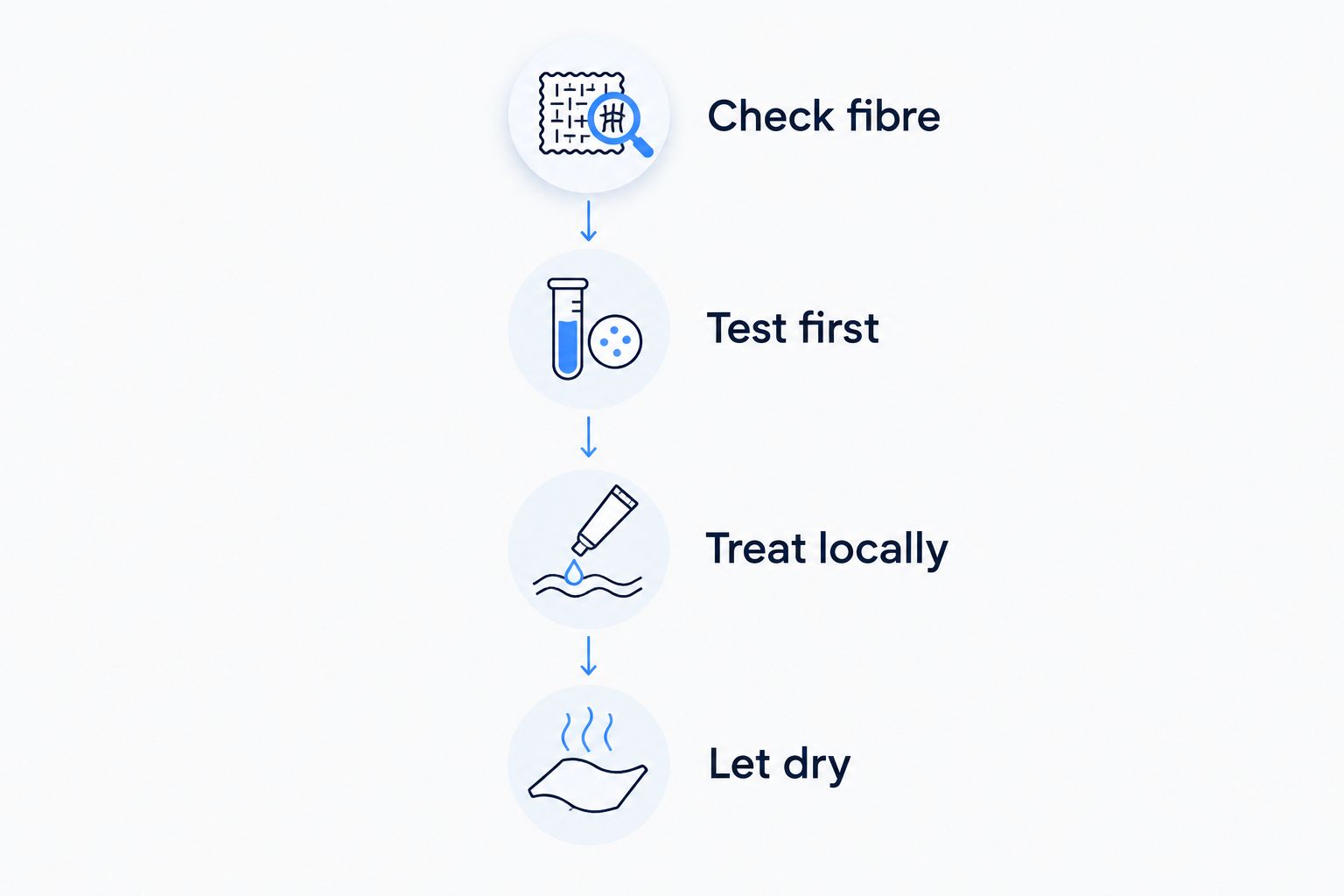
Check compatibility before treatment, and judge the result only after drying.
How these options are ranked
This 2026 ranking prioritises fibre compatibility, stain suitability, residue removal and control over moisture. Spot cleaner takes the default position because the guide starts with local marks; extraction detergent belongs to a different, broader cleaning task.
The ranking is a decision guide, not a laboratory comparison of retail formulations. A correctly matched lower-ranked option is a better choice than the default applied to the wrong carpet.
Which carpet cleaning product should you choose?
For an isolated everyday mark, choose a carpet-compatible spot cleaner. Choose an enzyme formulation for a matching organic stain, and make wool suitability your first filter when the carpet contains wool. Reserve extraction detergent for a planned equipment-based clean.
For your 2026 end-of-lease clean, confirm the expected scope before arranging work. Housekept provides end-of-lease cleaning services; ask whether your required carpet treatment is included rather than assuming every cleaning task is covered.
Plan your end-of-lease clean
Check cleaning services for your rental in Sydney, Shoalhaven or Illawarra.
FAQ
What are the best carpet cleaning products for renters in 2026?
The best carpet cleaning products for renters are those that match the carpet fibre and stain. Start with a carpet-compatible spot cleaner for an isolated everyday mark, and choose specialised treatments only when their directions fit the problem.
Is an enzyme cleaner better than a normal carpet cleaner?
An enzyme cleaner is a more targeted choice for organic stains covered by its label, not a better choice for every carpet problem. Check fibre compatibility and follow its application and removal instructions.
Can I use any carpet cleaner on wool?
No—use a cleaner whose instructions explicitly permit your wool carpet. Check the carpet care information too, and test in a discreet area before treating the visible mark.
Should I use a spot cleaner or an extraction machine?
Use a compatible spot cleaner for a local mark and consider extraction equipment for a broader cleaning task. Extraction requires the correct detergent, permitted carpet treatment and a drying plan.
Can I use washing-up liquid in a carpet-cleaning machine?
Do not substitute washing-up liquid for the detergent specified by the carpet-cleaning machine instructions. Choose a formulation compatible with both the equipment and your carpet.
Will cleaning the carpet guarantee my bond back?
Carpet cleaning does not guarantee the return of your bond. Check the applicable tenancy requirements, the condition of the property and any documented cleaning expectations rather than relying on a product claim.
Does Housekept provide end-of-lease cleaning?
Housekept provides end-of-lease cleaning services across Sydney, Shoalhaven and Illawarra. Confirm the scope of the booking and any required carpet treatment before arranging the service.
One last thing
Do not judge a carpet-cleaning result while the patch is wet. Let it dry according to the care instructions, then inspect the colour, texture and remaining mark. That pause prevents you from treating a temporary wet patch as a failed clean and adding unnecessary product.