
How to pass a bond inspection the first time

To pass a bond inspection the first time, return the property reasonably clean, compare its condition with your entry report, address damage separately and photograph the finished rooms before returning the keys. Cleaning alone does not settle every bond issue: in NSW, fair wear and tear is treated differently from damage, and a professional cleaning receipt does not guarantee your bond refund.
TL;DR
- How to pass a bond inspection the first time: use your entry condition report, not guesswork.
- Housekept provides end-of-lease cleaning for renters across Sydney, Shoalhaven and Illawarra.
- Separate removable dirt, existing defects and damage before deciding what needs attention.
- Photograph the empty, cleaned property and keep your handover correspondence.
Why this matters
A bond inspection is not a test of whether your home looks newly renovated. For NSW renters preparing to move in 2026, the useful comparison is between the property's documented starting condition and its condition at handover, allowing for fair wear and tear.
Clean against the entry report, not an imagined showroom standard. That keeps your attention on dirt you can remove and differences you need to explain. If you need help with the cleaning, Housekept's cleaning services include end-of-lease work; confirm the actual tasks before booking.
How do you pass a bond inspection the first time?
Work through the following sequence. Finish removal work before the final clean, then inspect the result while you still have access to the property.
1. Compare the entry records
Start with 3 records: your entry condition report, entry photographs and written maintenance correspondence. Read them together, room by room, rather than relying on memory.
List existing marks, worn finishes and previously reported faults. Beside each item, note what has changed and what remains the same. Keep the original files intact so you can produce them if a disagreement arises.
Ask the agent for their outgoing inspection checklist as well. Use it to organise the handover, but distinguish requested cleaning tasks from questions about legal responsibility.
2. Separate dirt from damage
Grease on a cooktop is a cleaning task. A cracked cooktop is a different issue. Scrubbing harder will not resolve damage, and aggressive treatment can make a surface worse.
Create separate lists for cleaning, existing defects and damage requiring discussion. Report maintenance concerns in writing rather than concealing them with paint, filler or furniture. If responsibility is disputed, keep the evidence and seek NSW tenancy advice before agreeing to a deduction.
3. Empty the property before the final clean
Remove furniture, belongings, food and rubbish before cleaning the areas they cover. Check cupboards, drawers, storage cages, balconies and any other spaces included in the tenancy.
Moving creates fresh dirt. Shoes mark floors, furniture reveals dust and boxes hide corners. A clean completed before removalists finish needs another inspection afterwards, especially along the route to the front door.
Keep cleaning equipment accessible until the last walkthrough. Packing every cloth and rubbish bag too early leaves you without a way to fix small problems.
4. Clean high surfaces before floors
Work from upper surfaces down, then finish floors towards the exit. Dusting a fan or wiping a shelf after mopping deposits dirt on an area you have already finished.
Use products suited to each surface and follow their labels. Never mix cleaning chemicals. Avoid abrasive treatment on finishes that scratch, and do not climb onto unstable furniture to reach fittings.
Clean accessible areas safely. Raise inaccessible windows, high fittings or specialist work with the agent or cleaner instead of improvising.
5. Check the details room by room
A tidy room can still contain dirty drawers, greasy filters or dusty tracks. Open what the inspector will open and look behind what you have moved.
Kitchen
- What to inspect: Oven, cooktop, rangehood, cupboards and splashback
- Final check: Open drawers and inspect appliance edges
Bathroom
- What to inspect: Shower screen, basin, toilet, taps and accessible grout
- Final check: Check for residue after surfaces dry
Bedrooms
- What to inspect: Wardrobes, shelves, skirting boards and floors
- Final check: Inspect corners previously covered by furniture
Living areas
- What to inspect: Switches, doors, tracks and accessible fittings
- Final check: Look across surfaces in daylight
Laundry
- What to inspect: Trough, cupboards, floor and appliance spaces
- Final check: Remove lint and belongings
Outdoor areas
- What to inspect: Balcony, garage, bins and included garden areas
- Final check: Remove personal items and rubbish
Only clean appliances and spaces included in your tenancy. Do not dismantle equipment or disturb electrical components to reach hidden dirt.
6. Photograph the finished condition
Take 2 types of photos: wide views showing each room and close-ups showing details or disputed areas. Photograph after cleaning and rubbish removal, not while the property is still being packed.
Keep original files and save a copy somewhere you can access after moving. Include appliance interiors, empty cupboards, floors, wet areas and any existing defects that remain visible.
Photos support your account of the handover. They do not replace cleaning, repair an omission or prove what lies outside the frame.
7. Confirm access and return the keys
Confirm the inspection arrangements, key-return process and any required access devices in writing. Include remotes, fobs and other items supplied with the tenancy.
Check the property once more before surrendering access. Keep the key-return confirmation with your condition records, and give the agent a reliable way to contact you about the inspection.
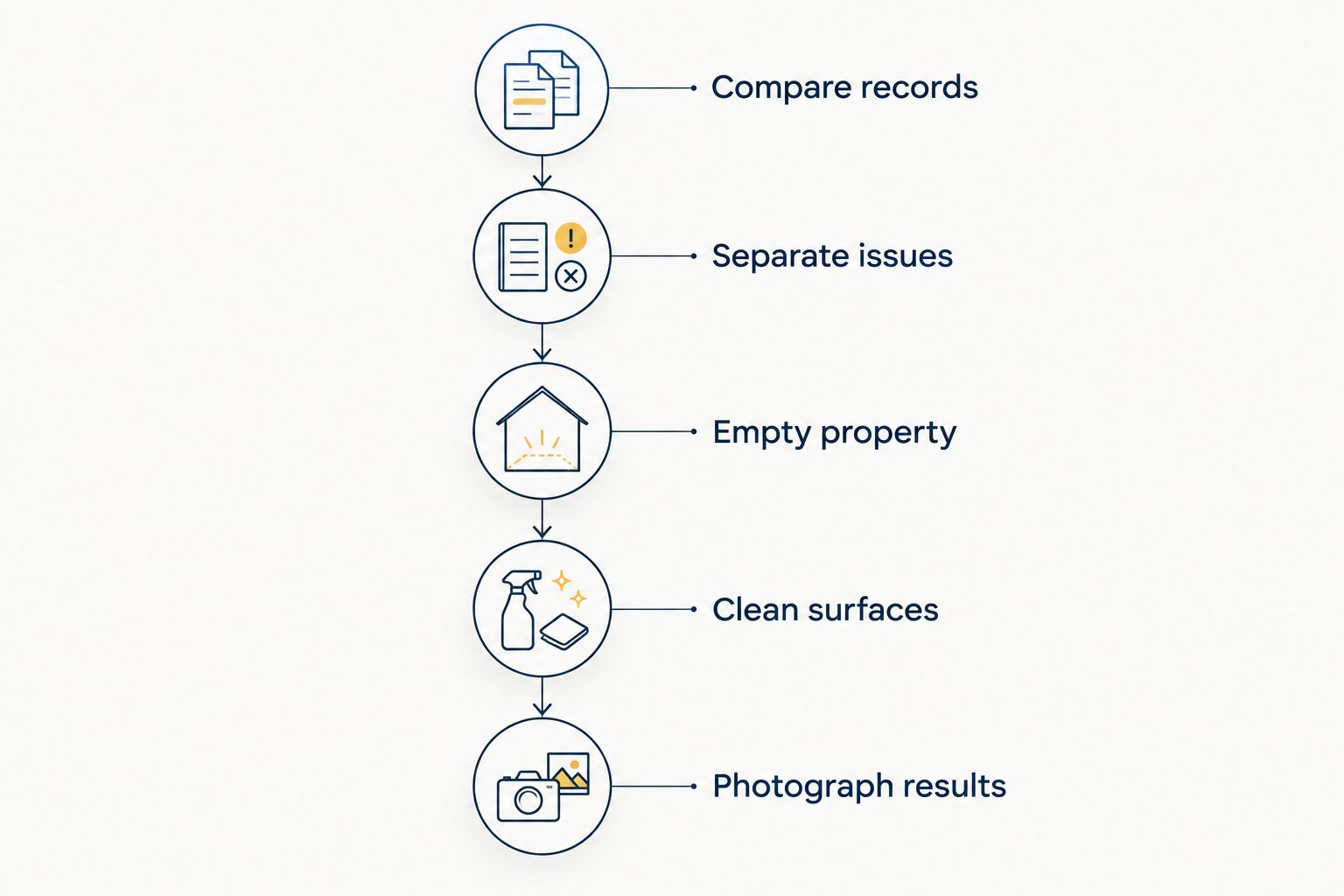
Document the result after the property is empty and the cleaning is finished.
Why bond inspection preparation varies
There is no single cleaning checklist that captures every tenancy. Your 2026 handover plan should reflect the actual property and its documented starting condition.
- Starting condition: Existing marks and wear need records, not automatic replacement or restoration.
- Included spaces: A garage, balcony or garden adds areas to check when it forms part of the tenancy.
- Surface materials: Stone, timber, glass and coated finishes require different cleaning methods.
- Appliances: Supplied appliances need attention inside and around accessible components.
- Property condition: Accumulated grease, soap residue and dust require different work from routine upkeep.
- Access sequence: Furniture removal, cleaning and key return need to happen in a workable order.
Translate these factors into named tasks. “Clean the bathroom” is vague; “remove soap residue from the shower screen and wipe the vanity drawers” gives you something you can inspect.
Do I need professional cleaning to pass?
Professional cleaning is not a universal requirement for every NSW rental. NSW Fair Trading's tenancy guidance distinguishes reasonable cleanliness from fair wear and tear; particular circumstances, including permitted carpet-cleaning conditions, need separate attention.
For a 2026 move, check your agreement against current NSW rules rather than assuming every written demand is enforceable. A cleaner can carry out agreed cleaning work, but cannot decide a tenancy dispute or promise the agent will approve every aspect of the property.
Does an inspection checklist override the entry report?
An inspection checklist helps you organise tasks; it does not erase evidence of the property's starting condition. Keep both documents available and compare specific concerns against your entry records.
If the agent identifies an issue, ask which room, surface and condition they mean. A precise request is easier to assess than a general statement that the property needs more cleaning.
Prepare the property before the cleaner arrives
Whether you clean yourself or book help, preparation determines which surfaces are accessible. Remove belongings from wardrobes, cupboards and drawers; a cleaner cannot properly wipe a shelf that is still full.
The practical point of preparing for a deep clean is to separate clearing from cleaning: empty surfaces expose the dirt, while an agreed task list defines the work. For a rental handover, add the entry report and the agent's specific concerns to that preparation.
Leave clear instructions about keys, parking and access restrictions. Identify delicate surfaces and known faults before anyone starts. Do not ask a cleaner to remove a mark without explaining whether it is on painted timber, stone, glass or another material.
Keep utilities available where the agreed cleaning needs them, and confirm practical requirements directly with the provider. Do not assume external windows, carpet treatment, rubbish removal or garden work belong to the same booking.
For a 2026 move, put the removal, cleaning and inspection arrangements in one calendar. The final inspection and bond-clean booking workflow focuses on connecting those tasks rather than treating the clean as an isolated appointment.
Should you clean yourself or book help?
Choose based on the work, your access to suitable equipment and the time you can give the property. Neither option removes your responsibility to check the finished condition.
DIY end-of-lease cleaning
- Best for: Renters able to complete and inspect every task
- Advantage: Direct control over the sequence and detail
- Limitation: You organise the equipment and do all the work
Professional end-of-lease cleaning
- Best for: Renters wanting help with the cleaning workload
- Advantage: Agreed cleaning tasks are handled by a service provider
- Limitation: Exclusions and non-cleaning issues still need attention
Housekept is best for renters seeking end-of-lease cleaning in Sydney, Shoalhaven or Illawarra. The service addresses cleaning, not the legal outcome of a bond claim; confirm the scope and assess the property separately for damage or maintenance issues.
Before booking Housekept, send a clear task list and ask what is included. Get any arrangements for inspection feedback in writing rather than assuming a return visit or guarantee applies.
Plan your end-of-lease clean
Confirm the cleaning scope before your rental handover.
Check the property before handing it back
Use 3 final checks: surfaces, storage and exit. This is a walkthrough of completed work, not the moment to begin a full clean.
- Surfaces: Look for dust, grease, streaks and cleaning-product residue. Check glass and wet areas once dry.
- Storage: Open every included cupboard and drawer. Remove belongings, loose rubbish and shelf debris.
- Exit: Inspect floors after everyone leaves, check that supplied access items are accounted for and confirm the key-return arrangement.
If the agent raises a concern after inspection, ask for written details and photographs. Compare those with your entry records and handover images before accepting responsibility.
For a 2026 handover dispute, use current NSW Fair Trading information or a tenants' advice service. Cleaning advice cannot determine whether a proposed bond deduction is lawful.
FAQ
What's the best way to pass a bond inspection the first time?
Compare the property with your entry condition report, complete the cleaning and photograph the empty rooms before returning the keys. Deal with damage and maintenance concerns separately from dirt.
Do I have to hire a professional cleaner in NSW?
Professional cleaning is not a universal requirement for every NSW tenancy. Check current NSW tenancy rules and any applicable conditions, including permitted carpet-cleaning requirements, rather than assuming every lease clause applies.
Can I lose my bond for normal wear and tear?
NSW tenants are not responsible for fair wear and tear. Whether a particular mark is wear, dirt or damage depends on the circumstances and evidence.
Should I clean before or after the removalists?
Complete the final clean after the removalists finish. Empty rooms expose hidden dirt, and moving furniture can mark floors that were already cleaned.
Does a cleaning receipt guarantee my bond refund?
A cleaning receipt does not guarantee a bond refund. It records a service, but the property's condition and any other tenancy issues still need assessment.
What should I photograph before returning the keys?
Photograph each empty room, appliance interiors, cupboards, floors, wet areas and relevant existing defects. Keep wide views and detail images in their original files.
What should I do if the agent says the property is still dirty?
Ask for the specific locations, written concerns and photographs. Compare them with your handover evidence and clarify any proposed access or cleaning arrangements before agreeing to a deduction.
One last thing
Inspect the property after the final person walks out. A completed clean can be undone by a forgotten rubbish bag, dusty removal equipment or a last trip through wet floors.
Keep your phone, a cloth and a rubbish bag available until that final check. Then take the finished-condition photos, secure the property as agreed and retain the key-return confirmation. Your strongest handover combines a clean property with a clear record of what you returned.