
How to prepare your home for an end of lease clean

Prepare your home for an end-of-lease clean by moving out your belongings, removing rubbish, confirming the cleaning scope and arranging access with working water and electricity. For your 2026 move, book the clean after removalists and repair work have finished, but before key handover; cleaning does not replace repairs or guarantee your bond return.
TL;DR
- How to prepare your home for an end of lease clean: empty rooms, confirm scope and arrange access.
- Book end-of-lease cleaning after removalists and repair work, before the final inspection and key handover.
- Housekept provides end-of-lease cleaning in Sydney, Shoalhaven and Illawarra.
- Keep your entry condition report, cleaning instructions and final photographs together for handover.
Why this matters
Your preparation should give the cleaner access, not duplicate the clean. Packed cupboards, leftover furniture and disconnected utilities create obstacles that a booking confirmation alone does not resolve. Clear those obstacles before the appointment.
Build your moving schedule around the order of work rather than assuming the cleaner can fit between other jobs. The guide to how long end-of-lease cleaning takes covers the timing question; confirm the actual appointment requirements directly with your cleaner.
How do you prepare your home for an end-of-lease clean?
Follow this sequence: move out, confirm the scope, prepare appliances, arrange access, flag problems and check the handover. Keep the agent's instructions and your entry condition report beside your moving checklist so important details do not stay buried in messages.
Move out
Remove your furniture, packed boxes and personal belongings before the clean, unless you have agreed otherwise. Empty wardrobes, drawers, kitchen cupboards and bathroom cabinets so their interiors are accessible.
Do a separate sweep for items that get overlooked during packing:
- Bags behind bedroom doors and inside built-in wardrobes.
- Food, containers and cleaning products under kitchen benches.
- Toiletries in shower niches and vanity drawers.
- Laundry supplies, pegs and items behind appliances.
- Pots, tools and personal items on balconies or in storage areas.
Leave fixtures and any landlord-owned items that belong with the property. If the rental is furnished, identify what stays and agree how the cleaner will access the surrounding surfaces. Do not assume that moving heavy furniture is included.
Remove your rubbish rather than gathering it in a corner. Keep bins usable for the remaining move-out tasks, and arrange disposal of unwanted furniture separately from the cleaning appointment.
Confirm scope
Ask for a written description of the work before the appointment. An end-of-lease label does not tell you whether a particular window, appliance, outdoor area or specialist task is included.
Send the cleaner any agent-issued checklist and describe the property's current condition. Mention heavy grease, pet hair, substantial soap build-up and any rooms that have been difficult to maintain. Photographs help explain a specific concern without relying on phrases such as fairly dirty.
Use this scope check when planning your 2026 booking:
Kitchen
- What you should clarify: Oven, rangehood, cupboards and appliance interiors
- Preparation before arrival: Remove food, cookware and personal items
Bathrooms
- What you should clarify: Shower screens, tiles, grout and exhaust covers
- Preparation before arrival: Clear toiletries, mats and bathroom storage
Windows
- What you should clarify: Which glass, tracks and accessible surfaces are included
- Preparation before arrival: Remove objects blocking access
Floors
- What you should clarify: What floor cleaning is included and whether separate treatment is needed
- Preparation before arrival: Clear furniture, boxes and loose items
Outdoor areas
- What you should clarify: Whether balconies, garages or other spaces are included
- Preparation before arrival: Remove belongings and flag access restrictions
Treat an unconfirmed task as a question, not an inclusion. Ask about exclusions, access limits and how the cleaner handles a task that cannot be completed safely.
Prepare appliances
Empty appliances that are included in the agreed clean. Remove food from the fridge and freezer, take dishes out of the dishwasher and clear laundry from the washing machine.
If the freezer needs defrosting, follow the appliance manufacturer's instructions and arrange it before the appointment. Keep meltwater contained. Do not expect a cleaner to work around frozen food or an appliance that is still draining across the floor.
Let the oven and cooktop cool before arrival. Avoid starting a strong chemical treatment immediately before handing the kitchen over; tell the cleaner about any product already applied and follow its label instructions.
Do not disconnect gas appliances or move heavy appliances without an appropriate plan. If an appliance is staying, confirm whether the space behind it is accessible and included rather than pulling it out on the cleaner's behalf.
Arrange access
Confirm how the cleaner will enter, where they can park and how they will leave the property secure. Include building entry instructions, lift arrangements and any restrictions relevant to the booking.
Keep water and electricity connected for the work that requires them. Coordinate utility disconnection with the cleaning appointment and handover rather than cancelling everything as soon as the removalist leaves.
Give the cleaner a contact number that you will actually answer on moving day. Arrange somewhere safe for children and pets away from the work, and identify any doors or gates that must remain closed.
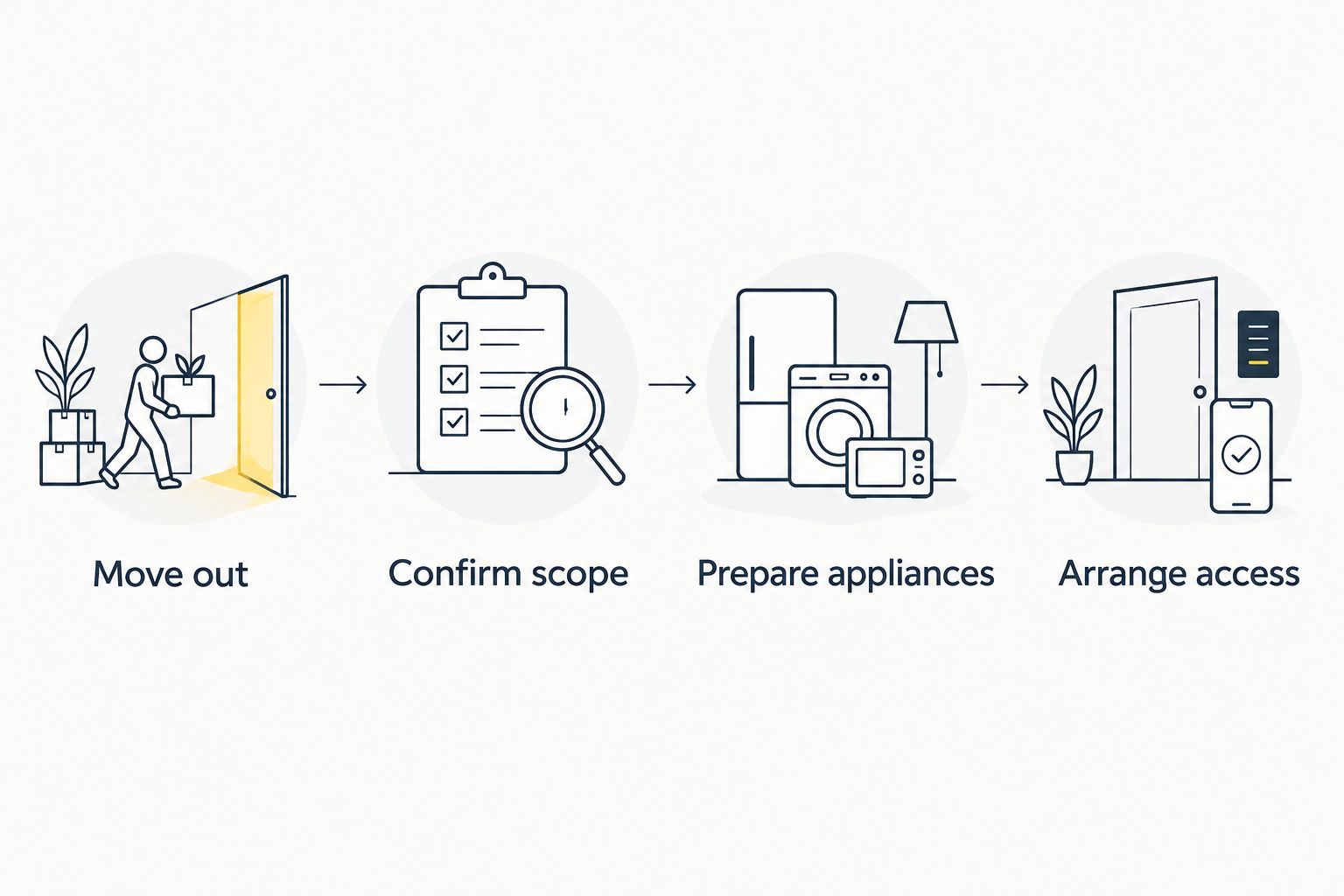
Finish the access and preparation tasks before the cleaner arrives.
Flag problems
Tell the cleaner about damage, loose fittings, unsafe areas and surfaces with special care instructions. Cleaning and repair are different jobs: a cracked tile, damaged flyscreen or broken cupboard hinge needs its own decision.
Identify mould, suspected hazardous material or an inaccessible area before the appointment. Ask whether the issue sits within the cleaner's scope; do not assume an ordinary clean includes specialist treatment.
Compare concerns with the entry condition report and dated photographs. Record what is present without attempting to hide it through aggressive scrubbing, painting or an improvised repair.
Check handover
Agree how completion will be communicated and whether you can inspect the property before keys are returned. If you cannot attend, ask what completion information can be provided rather than assuming photographs are included.
Keep the booking details, agreed scope and any receipt together. These documents record the service arranged; they do not establish that every tenancy obligation has been met.
Avoid sending removalists or trades back through the property after the clean. If another visit is unavoidable, plan who will deal with any dust, footprints or packaging left behind.
Why end-of-lease preparation varies
The right preparation depends on the property and agreed work, not simply the number of rooms. For your 2026 move-out checklist, adjust these factors before confirming the appointment:
- Furnished or empty: retained furniture changes what the cleaner can reach. Identify ownership and agree what can be moved.
- Current condition: describe grease, accumulated grime, pet hair and neglected storage areas rather than relying on a general cleanliness rating.
- Appliances staying behind: fridge, freezer and oven preparation depends on which appliances remain and which interiors are included.
- Building access: parking, stairs, lifts and entry restrictions affect how the appointment is organised. Pass on the relevant instructions.
- Additional work: repairs, rubbish removal, carpet treatment and outdoor tasks need clear responsibility. Do not bundle them into an assumption about cleaning.
- Handover arrangements: your final inspection, key return and utility disconnection must fit around the clean. Confirm the sequence with everyone involved.
What should you do with belongings you cannot move yet?
Agree on remaining items before cleaning day, not at the front door. Tell the cleaner exactly what will still be there and which surfaces it blocks. A room used for temporary storage is not an empty room, even if every box is neatly stacked.
Sort the contents before moving them elsewhere. When you organise a cluttered room, separate belongings to keep, donate and dispose of rather than transferring an unsorted pile into the next cupboard. Finish the removal before asking someone to clean the storage space.
Keep move-day essentials in a bag that leaves with you. Documents, medication, chargers and keys should not be scattered through rooms that are being cleaned. Check shared storage spaces with housemates so nobody assumes another person has emptied them.
If landlord-owned furniture stays, distinguish it from your belongings in the instructions. The cleaner needs to know what remains, not make that decision on your behalf.
What should you check in each room before the cleaner arrives?
Walk through the empty property once the removal work is finished. Use this pass to find access problems and forgotten belongings, not to perform the detailed clean you have booked.
Kitchen and laundry
Open cupboards and drawers to check that they are empty. Look above overhead cupboards and inside the pantry for items missed during packing, but do not climb on benches or unstable furniture to reach them.
Remove food waste and check the sink is accessible. Tell the cleaner about leaks, blocked drains or an appliance that is not working; those problems need attention separate from wiping and washing surfaces.
Bathrooms
Remove towels, mats, toiletries and personal storage items. Leave the shower, bath, basin and toilet accessible, and flag loose fittings or damaged surfaces before work starts.
Do not combine leftover cleaning products to use them up before moving. Keep products in their original containers and follow label directions. Tell the cleaner if you have already applied anything to a surface.
Bedrooms and living areas
Check wardrobes, shelves and spaces behind doors. Remove temporary hooks or attachments only where appropriate and consistent with the tenancy arrangements; avoid damaging the surface while trying to tidy it.
Clear floor areas and access to windows. Keep any keys, remotes or property items that must remain together in an agreed place rather than leaving them mixed with rubbish.
Balconies, garages and storage
Check these spaces even when they are outside the cleaning scope. Remove your possessions and clarify responsibility for any remaining outdoor or storage-area work.
Do not leave paint, chemicals or other materials for the cleaner to dispose of without agreement. Arrange suitable disposal separately and keep access routes clear.
Do you need to clean before an end-of-lease cleaner comes?
You need to declutter, remove rubbish and make the agreed areas accessible; you do not need to repeat the detailed cleaning you have booked. Ask the cleaner if a specific preparation task is required, especially where appliances or retained furniture are involved.
Housekept end-of-lease cleaning is for renters in Sydney, Shoalhaven and Illawarra who want professional help with move-out cleaning. Housekept is for renters seeking end-of-lease cleaning across those areas, not a substitute for arranging repairs or resolving tenancy questions. You can review Housekept when deciding who to contact, then confirm your property's scope directly.
Should you book the clean before or after moving out?
Book the clean after your belongings and removalists have left, and after work that will create dust or debris. Arrange it before the final inspection and key handover so cleaning concerns can be raised while access is still available.
For a 2026 booking, put the removal, repair, cleaning, inspection and key-return appointments in the same calendar. Confirm changes directly with the affected people; a calendar entry alone does not change a booking.
Does an end-of-lease clean guarantee your bond back?
An end-of-lease clean does not guarantee your bond back. Cleaning is only one part of the property's handover, and a cleaner cannot resolve unrelated damage or other tenancy matters through a cleaning appointment.
Keep your condition records and communicate concerns clearly. If there is a disagreement, use the relevant tenancy advice and dispute process rather than treating a cleaning receipt as the final answer.
FAQ
Do I need to empty every cupboard before an end-of-lease clean?
Empty cupboards and drawers that are included in the clean so their interior surfaces are accessible. Identify any landlord-owned contents and agree how those areas will be handled.
Can I leave furniture in the house during the clean?
Tell the cleaner before booking if furniture will remain. Agree what can be accessed and whether moving any furniture is included; do not assume heavy items will be moved.
Should I switch off the electricity before the cleaner arrives?
Keep electricity connected for the cleaning work that requires it. Coordinate disconnection with the appointment and handover, and confirm any property-specific requirements with the cleaner.
Do I have to defrost the freezer before an end-of-lease clean?
If freezer cleaning is included and defrosting is required, arrange it beforehand using the manufacturer's instructions. Empty the freezer and contain meltwater before the appointment.
Does Housekept provide end-of-lease cleaning in my area?
Housekept provides end-of-lease cleaning across Sydney, Shoalhaven and Illawarra. Confirm your address, property condition and required work when arranging the service.
Should I leave the agent's cleaning checklist for the cleaner?
Send the agent's checklist before the appointment and confirm which tasks are included. Keep a copy with your booking details so both parties are working from the same instructions.
Can I return the keys straight after the clean?
Coordinate key return with the agreed handover arrangements and any opportunity to check the completed work. Do not assume access will remain available once the keys have been returned.
One last thing
Take your final photographs after everyone has finished, not while boxes are still being carried out. Otherwise, your record shows an intermediate stage rather than the property you handed back.
Before closing out your 2026 move, check the property for belongings once more, record its final condition and secure it according to the handover instructions. Keep those records somewhere you can find without unpacking your new home.