
How often should you get your house professionally cleaned?
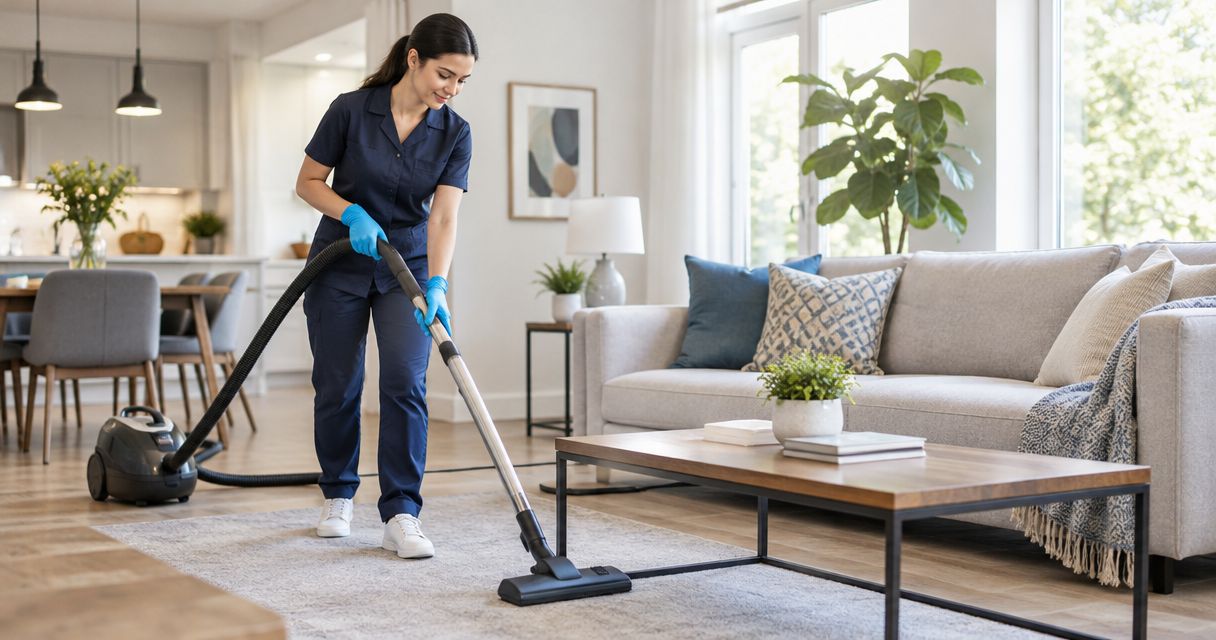
Start with a fortnightly professional clean, then choose weekly visits if household mess outpaces your own upkeep, or monthly visits if you handle routine cleaning yourself. The right schedule depends on what gets dirty between visits; professional cleaning does not replace dealing with spills, dishes and everyday rubbish.
TL;DR
- How often should you get your house professionally cleaned? Start fortnightly and adjust to the work left between visits.
- Choose weekly house cleaning when floors, bathrooms and kitchen surfaces need more support between visits.
- Choose monthly professional cleaning only when you can manage routine cleaning yourself.
- Housekept provides home cleaning across Sydney, Shoalhaven and Illawarra; match your booking to the tasks you need.
Why this matters
Book for the work you want taken off your hands, not just a date on the calendar. A frequent visit with an unclear task list can leave the same jobs unfinished. A longer gap also leaves you responsible for more upkeep.
For your 2026 cleaning plan, decide whether you want help maintaining the home or catching up on neglected tasks. Those are different briefs. You can review the cleaning services before discussing a schedule, but confirm the actual inclusions rather than assuming every task comes with every visit.
How often should you get your house professionally cleaned?
Use fortnightly cleaning as a starting recommendation, not a rule for every home. Move to weekly support when you cannot maintain the rooms you use most, or monthly support when you already manage the routine work.
The comparison below is a decision guide, not a claim about what every household needs. Choose according to your workload and expectations.
Weekly: every 7 days
- Best for: Households wanting more frequent help with routine tasks
- Main benefit: Shorter gaps between professional visits
- Main limitation: More appointments to organise; daily tasks still remain
Fortnightly: every 14 days
- Best for: Households sharing cleaning between themselves and a cleaner
- Main benefit: A regular reset alongside your own upkeep
- Main limitation: Busy rooms still need attention between visits
Monthly
- Best for: Households already managing routine cleaning
- Main benefit: Extra help without a frequent appointment
- Main limitation: Unsuitable as the only cleaning in a regularly used home
One-off
- Best for: A defined catch-up job or change in circumstances
- Main benefit: Focuses the booking on a particular need
- Main limitation: Does not create an ongoing maintenance routine
Start by looking at the condition of the home before a proposed visit, not immediately afterwards. If you are repeatedly doing a major catch-up beforehand, shorten the gap or change the task list. If the agreed work remains manageable, keep the schedule.
Weekly cleaning: every 7 days
Best for: households that want frequent support with routine cleaning. A weekly schedule puts 7 days between visits, which gives you a clear rhythm for planning access and dividing household jobs.
Choose weekly support when the same essential tasks repeatedly fall behind. That might mean bathroom cleaning, floor cleaning or kitchen surface cleaning. Ask for those priorities explicitly; a weekly booking alone does not define the work.
The benefit is a shorter interval between visits. The trade-off is that you must organise more appointments and still handle immediate mess yourself. A spill should not wait for cleaning day, and a regular visit is not a substitute for washing dishes or emptying a full bin.
Before committing to weekly cleaning in 2026, identify what you expect to stop doing yourself. If your list is mainly occasional detail work, a different scope rather than a shorter interval is the better starting point.
Fortnightly cleaning: every 14 days
Best for: households that want regular help while keeping up with everyday cleaning. Fortnightly cleaning means a visit every 14 days, with you handling the work that arises between appointments.
Use this schedule when you want a recurring reset but do not need a cleaner every week. Keep the arrangement specific: name the rooms, the surfaces and the tasks that matter most. Tell the cleaner which jobs you will continue doing yourself.
The advantage is a straightforward division of responsibility. The limitation is the gap: if bathroom surfaces or floors need attention before the next visit, that work remains yours unless you change the arrangement.
Do not judge the schedule from a particularly quiet stretch at home. Look at an ordinary period with your usual cooking, visitors and household routines. Keep fortnightly cleaning if it supports that normal workload without leaving you with an unwanted catch-up session.
Monthly cleaning: once each calendar month
Best for: households that already manage routine cleaning and want additional help. Monthly professional cleaning works as support for an existing routine, not as permission to leave a lived-in home untouched between visits.
Define what the monthly visit should achieve. You might want help with agreed detail tasks, a broader clean of regularly used rooms, or work you find difficult to complete yourself. Confirm the scope before booking; do not assume monthly cleaning automatically means deep cleaning.
The benefit is fewer appointments to coordinate. The drawback is that more cleaning falls to you between them. If you keep postponing necessary work until the cleaner arrives, monthly support does not match the job you want it to do.
For a monthly schedule in 2026, decide whether you mean a calendar-month appointment or a repeating interval. State that clearly when arranging visits so your expectations match the booking.
One-off cleaning: a defined job, not a routine
Best for: a catch-up clean or a specific change in circumstances. A one-off booking lets you describe a particular job without treating it as an ongoing cleaning plan.
Use the brief to explain the home's current condition and your priorities. A kitchen needing detailed attention is a different request from routine cleaning throughout the house. Photos and a clear task list help communicate that difference without relying on a vague label.
The limitation is what happens afterwards. If the same workload continues, a one-off clean does not remove the need for regular upkeep. Decide who will maintain the home after the appointment rather than waiting until the same backlog returns.
Why your cleaning frequency varies
Choose a schedule around the work in your home, not the number of bedrooms alone. These factors help you turn a general preference into a useful cleaning brief.
- Room use: Tell the cleaner which rooms are used regularly and which need less attention. An unused room does not create the same workload as a busy kitchen.
- Pets: Include pet hair, tracked-in dirt and the areas your pets use when describing your priorities. Do not assume those tasks are understood without discussion.
- Your own upkeep: Be honest about the cleaning you actually complete. A schedule built around an ambitious routine you never follow will leave work unfinished.
- Tasks required: Routine floor and surface cleaning is a different brief from detailed work on neglected areas. Confirm the task list before choosing the interval.
- Access and assistance: Consider whether you can prepare rooms, move belongings or complete certain tasks yourself. Explain any support needs when arranging the service.
- Your preferred standard: Decide what you want the home to look and feel like between visits. Ask for a practical scope rather than expecting an undefined standard of spotless.
Change the task list before automatically adding more visits. If one area repeatedly disappoints while the rest of the home stays manageable, the problem is not necessarily the interval.
How do you choose a cleaning schedule that works?
Build your 2026 cleaning plan around a short written brief. The steps below separate the work you need from the appointment pattern you prefer.
- List priorities. Walk through the home and name the jobs you want help with. Use specific tasks rather than descriptions such as a good clean.
- Agree scope. Ask which tasks the proposed service covers and which need a separate discussion. Identify priorities if the full list cannot fit the booking.
- Choose frequency. Start fortnightly if you need a regular reset, weekly if routine tasks keep falling behind, or monthly if you handle the basics.
- Review results. Check the home before the next visit. Decide whether to change the interval, the task list or the work you do yourself.
A useful review asks whether the arrangement removed the work you wanted help with. A freshly cleaned room is not the whole test; the schedule also needs to make sense between appointments.
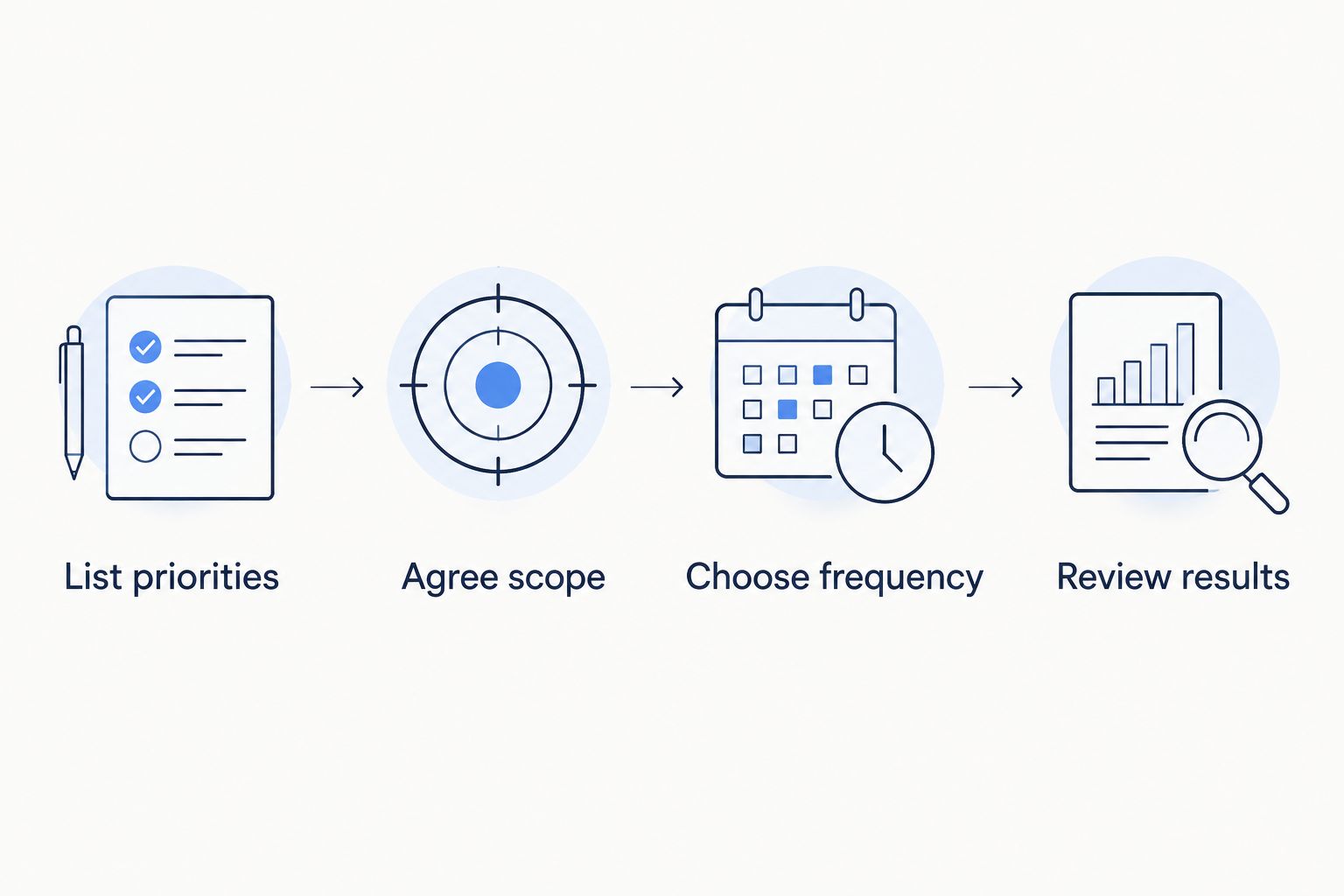
Agree on the work first, then choose how often you need help.
Give the cleaner an accurate picture of the property before discussing appointment length. For a separate look at that question, read how long a full house clean takes. Frequency and duration answer different questions: how often help arrives, and how much work the appointment can cover.
Is fortnightly cleaning enough if you have pets?
Every 14 days is a starting interval, not a guarantee that pet-related cleaning is covered. Choose the schedule according to the hair, dirt and other cleaning you are prepared to handle between visits.
Tell the cleaner which rooms your pets use and explain any access arrangements. If floors need attention before the next appointment, either handle that work yourself or discuss a more frequent visit. Do not expect an ordinary recurring appointment to include every pet-related task without agreement.
Is monthly cleaning enough if you live alone?
Once each calendar month works as additional support when you manage routine cleaning yourself. Living alone does not settle the question; your use of the home and the jobs you want help with matter more.
If you cook regularly, work from home or struggle to complete particular tasks, describe that workload. Choose the schedule around what needs doing rather than assuming a smaller household always needs less help.
Should you book a deep clean before regular cleaning?
A one-off clean is worth discussing when the initial job differs from routine upkeep. Describe built-up dirt and neglected areas so the cleaner can assess the starting scope separately from future visits.
Do not treat deep clean as a universal checklist. Agree on the tasks in writing, then decide what regular appointments should maintain. This avoids expecting the first recurring visit to absorb a catch-up job that was never discussed.
Where does Housekept fit?
Housekept home cleaning suits households seeking professional cleaning across Sydney, Shoalhaven and Illawarra. The service location fits those areas; your next step is to confirm whether the proposed scope matches your household's needs.
For Housekept home cleaning, take the same practical approach: describe the property, name your priorities and discuss the interval. Do not assume a particular task, appointment length or recurring arrangement is included without confirmation.
Plan your home cleaning
Review the services, then discuss the tasks and schedule your household needs.
FAQ
How often should I get my house professionally cleaned in 2026?
Start with fortnightly professional cleaning, then adjust to the work left between visits. Choose weekly support if routine tasks keep falling behind, or monthly support if you manage everyday cleaning yourself.
Is weekly cleaning better than fortnightly cleaning?
Weekly cleaning is the better fit when you want shorter gaps between professional visits. Fortnightly cleaning suits a shared arrangement where you handle necessary upkeep between appointments.
Is getting a cleaner once a month enough?
Monthly professional cleaning is additional support for a home you already maintain yourself. It is not a replacement for routine cleaning in regularly used rooms.
Do I still need to clean if I have a regular cleaner?
Yes, you still need to handle immediate mess and any tasks outside the agreed service. Confirm responsibility for dishes, rubbish, spills and other everyday work before the first appointment.
Should I tidy before my cleaner comes?
Make the areas covered by the booking accessible unless tidying is part of the agreed service. Discuss belongings, access and any tasks you cannot manage yourself in advance.
Does having pets mean I need weekly cleaning?
Pets do not automatically require weekly professional cleaning. Choose the interval according to the pet-related work in your home and what you will handle between visits.
How do I know when to change my cleaning schedule?
Change the schedule when essential cleaning repeatedly falls behind or the appointments no longer match your workload. Check the task list first, because an unclear scope can leave jobs unfinished regardless of frequency.
One last thing
Judge your cleaning schedule the day before the cleaner arrives, not just the day after. That is when you can see whether the gap between visits matches the work you want taken off your hands.
For the rest of 2026, keep the brief simple: what the cleaner handles, what you handle and what triggers a review. A clear division of work is more useful than a frequent booking with unclear expectations.