
Can commercial cleaners work after hours?
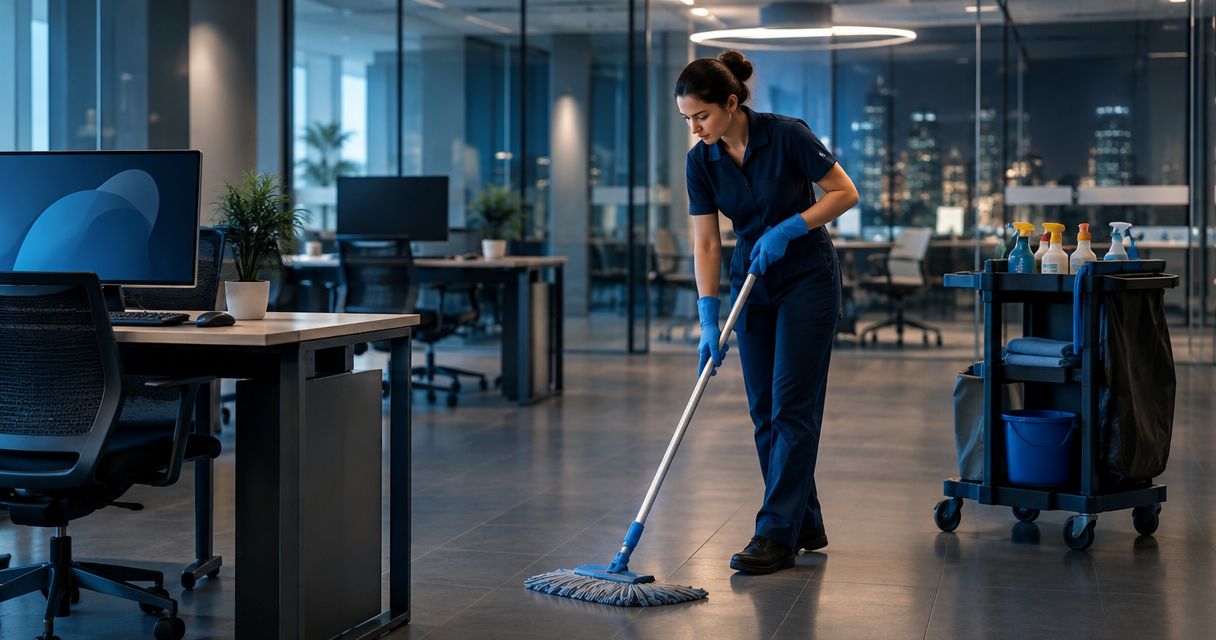
Yes, commercial cleaners can work after hours when the cleaning provider agrees to the schedule and your building permits access. Evening, overnight and early-morning cleaning can keep work away from staff and customers, but you still need to agree on security, noise, the cleaning scope and a safe reopening time.
TL;DR
- Can commercial cleaners work after hours? Yes, with an agreed schedule, authorised access and clear building rules.
- Choose evening, overnight or early-morning office cleaning around occupancy, noise restrictions and reopening needs.
- Housekept provides commercial cleaning across Sydney, Shoalhaven and Illawarra; confirm after-hours arrangements before booking.
- Put alarm instructions, restricted areas and the lock-up procedure in writing before the first visit.
Can commercial cleaners work after hours?
Commercial cleaners can work outside your business hours, but after-hours access must be arranged rather than assumed. Start with your closing and reopening times, then confirm which tasks fit between them. Include access, preparation and drying time, not just the cleaning itself.
Housekept provides residential and commercial cleaning across Sydney, Shoalhaven and Illawarra. Discuss your premises and proposed hours when enquiring about cleaning services; do not treat a general service listing as confirmation of a particular time slot.
During business hours
- Best for: Premises that need cleaning while occupied
- Main benefit: Staff can answer questions directly
- Main limitation: Cleaning must work around people and activity
After closing
- Best for: Businesses with a clear evening shutdown
- Main benefit: Cleaning happens after customers and most staff leave
- Main limitation: Late departures can delay access
Overnight
- Best for: Premises with an approved unoccupied window
- Main benefit: Work stays separate from normal operations
- Main limitation: Security, noise and emergency arrangements need attention
Before opening
- Best for: Businesses with a predictable opening routine
- Main benefit: Cleaning finishes before staff or customers arrive
- Main limitation: Delays can interfere with opening
Choose the window that your premises can support consistently. An empty building is helpful, but it does not automatically mean unrestricted access, permission to use noisy equipment or enough time to finish safely.
Why this matters
After-hours cleaning separates cleaning activity from the people using your workplace. That helps you avoid asking staff to move while floors are cleaned or interrupting customer-facing areas during service.
The trade-off is less direct supervision. When nobody from your business is present, written instructions replace the quick questions that would otherwise happen at reception.
For your 2026 cleaning plan, treat access and handover as part of the job. A cleaning schedule is incomplete if it explains what gets cleaned but not how the cleaner enters, reports a problem and secures the building afterwards.
After closing: best for a clear evening shutdown
An evening clean suits a business with a reliable closing routine. You can hand over once customers have left, staff have finished and the agreed areas are clear.
The benefit is a straightforward transition from business use to cleaning. The limitation is that a meeting running late, a delivery or an employee staying behind can change the working conditions.
Tell the provider whether closing time means everyone has left or only that customer service has ended. Those are different access conditions, especially when cleaning involves shared kitchens, toilets or corridors.
Choose an evening clean when you can provide a dependable handover, not simply an advertised closing time. Agree on what happens if part of the premises remains occupied.
Overnight: best for a separate cleaning window
Overnight cleaning keeps the work apart from normal daytime activity. It is an option to discuss when evening access is too short or staff remain on site late.
The benefit is separation from business operations. The limitation is that cleaners need clear instructions for access failures, alarms and emergencies when your usual contacts are not at work.
Confirm whether building management permits the proposed work and equipment at that time. Check shared corridors, lifts, loading areas and any nearby residential spaces before agreeing to noisy tasks.
Choose overnight cleaning only after the building rules and escalation arrangements are settled. Permission to enter a tenancy does not establish permission to clean every shared area.
Before opening: best for a predictable morning routine
Early-morning cleaning suits premises where the opening time is stable and access can happen before the first staff member arrives. It also puts the handover close to the start of the working day.
The benefit is a clear finish deadline. The limitation is limited room for delays: a locked entrance or unexpected mess can affect reopening if the schedule has no allowance for it.
Specify which areas must be ready first. Reception, toilets and the main entry route need a clear handover if staff begin arriving while other work continues.
Choose early-morning cleaning when completion and safe access can be confirmed before opening. Do not make the first employee responsible for discovering whether the premises are ready.
Why after-hours cleaning arrangements vary
There is no single after-hours schedule that fits every workplace. Your 2026 arrangement needs to reflect how the building actually operates, including the people who remain after the public doors close.
The main factors to settle are:
- Occupancy: Identify late-working staff, visitors and anyone who arrives before normal opening.
- Building access: Confirm approved entrances, lift access, keys, passes and any sign-in procedure.
- Noise restrictions: Check when equipment can operate without breaching building rules or disturbing neighbours.
- Cleaning scope: Separate routine work from tasks requiring extra preparation, isolation or specialist handling.
- Reopening conditions: Allow for floors to dry and equipment to be removed before people return.
- Site risks: Identify restricted rooms, lone-work concerns, confidential material and the emergency response procedure.
A written scope makes these differences visible. Without it, the business and cleaner can agree on the same arrival time while expecting very different work.
How do you arrange an after-hours commercial clean?
Use 3 stages: define the work, agree on access and confirm the handover. These stages give you a practical booking brief without relying on someone being available to explain the premises during every visit.
Define the work
List the rooms, surfaces and tasks included in the visit. Mark anything excluded, such as locked cupboards, sensitive equipment or rooms managed by another contractor.
Explain what must be ready at reopening. A floor that has been washed is not ready for use while it remains wet, so the finish requirement should describe the usable condition, not just the completed task.
For a 2026 service brief, keep routine cleaning and occasional extra work separate. This lets you discuss a changed scope without silently adding work to the same access window.
Agree on access
Confirm the approved entry point and how keys or passes are issued and returned. Use your building's authorised process for alarm instructions rather than leaving credentials in an open workplace note.
Nominate 2 contacts where practical: a primary contact and a backup. Confirm who handles a failed entry, an alarm or a problem that prevents the agreed work from proceeding.
Confirm the handover
Write down how the cleaner reports completion and any unfinished work. Include the required checks for windows, doors, lights, equipment and alarms where they apply to your premises.
Agree on what happens when conditions differ from the brief. A restricted room should remain restricted; it should not become accessible because a routine task is behind schedule.
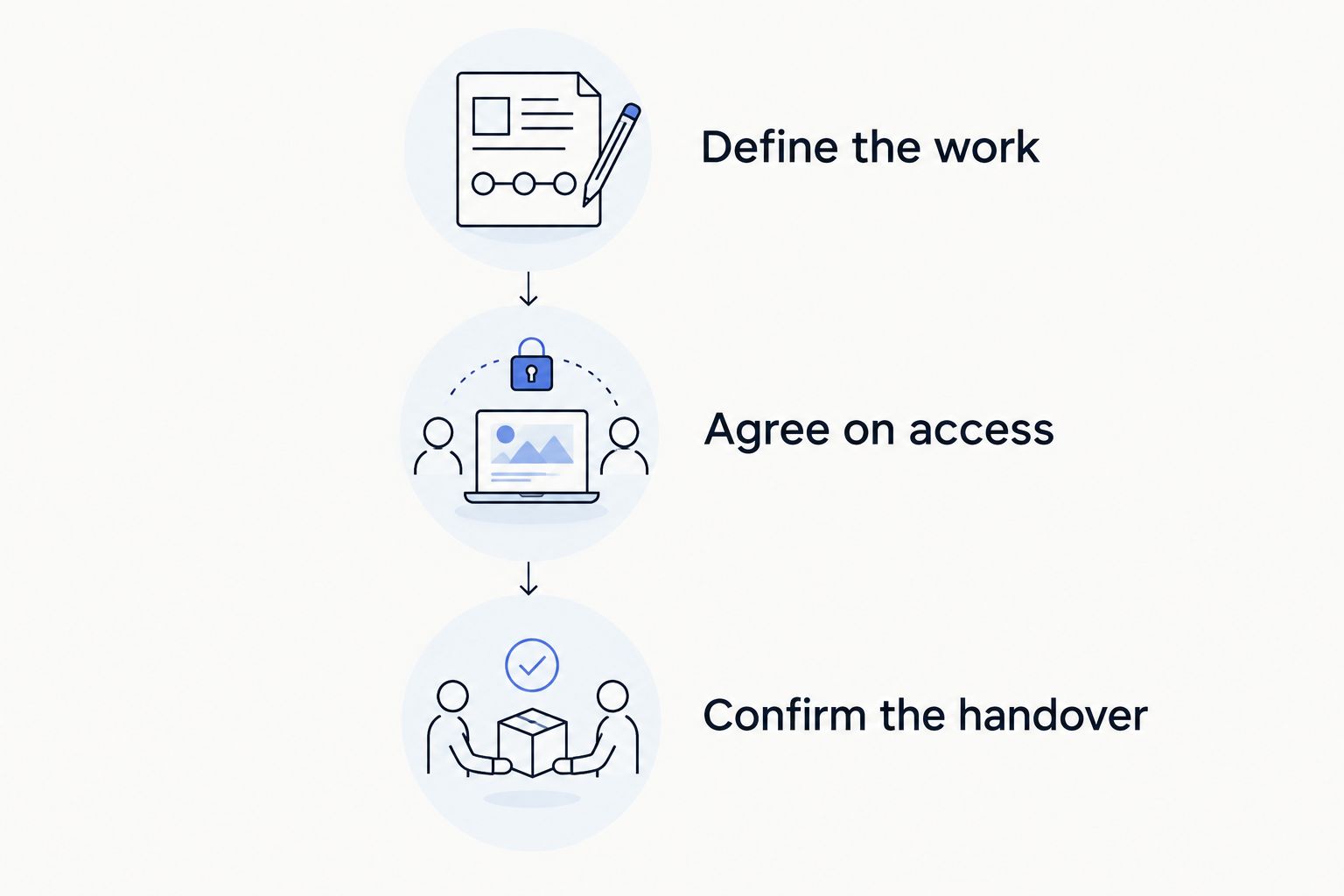
Agree on the cleaning scope, entry process and handover before the first unattended visit.
What needs extra attention in a clinic or sensitive workplace?
After-hours access does not make every task part of a routine commercial clean. A clinic needs a scope that distinguishes ordinary workplace cleaning from tasks governed by its clinical procedures and specialist waste arrangements.
When defining medical office cleaning requirements, separate waiting rooms, staff areas and toilets from treatment equipment, sharps and clinical waste. The clinic should identify the applicable procedures and confirm which tasks the cleaning provider is authorised and equipped to perform.
Do not leave that distinction to the cleaner arriving at a locked room after closing. Mark restricted areas and explain what to do if the cleaner encounters waste, equipment or contamination outside the agreed scope.
The same planning principle applies to confidential offices: authorise access by area and task. Cleaning a room does not require permission to open storage, handle records or move sensitive equipment.
Review these boundaries when your 2026 premises use changes. A room converted from storage to treatment space needs a new scope, not an unchanged entry on an old checklist.
How do you keep an unattended clean secure?
Give cleaners the access needed for the agreed work, with a documented lock-up procedure. Keep responsibility clear rather than assuming that the last person leaving knows every building requirement.
Before the first unattended visit, check the following:
- Keys and passes are issued through an approved process.
- Alarm instructions cover entry, exit and an accidental activation.
- Restricted areas are clearly identified.
- Emergency contacts know their role.
- The cleaner has a way to report access failures and incomplete tasks.
- Completion includes the agreed security checks, not just a message that cleaning has finished.
Protect confidential material before the visit. Store documents and portable valuables according to your workplace policy rather than asking cleaners to decide what is sensitive.
Housekept commercial cleaning is for businesses seeking cleaning services in Sydney, Shoalhaven and Illawarra. Confirm the proposed hours, site requirements and responsibilities directly before making an after-hours arrangement.
What should you check after the first visit?
Inspect against the agreed scope, not an unwritten expectation. Check whether the required areas were completed, floors were ready for use and any access or security issues were reported.
Ask the opening staff about practical problems. Equipment left in a walkway, an unclear completion message or a door that needs a different exit procedure belongs in the handover discussion.
Update 1 written brief rather than maintaining conflicting instructions across emails, messages and reception notes. Keep the current version available through your approved process and withdraw instructions that no longer apply.
For a recurring 2026 arrangement, review the brief whenever operating hours, building access or room use changes. A reliable schedule depends on current instructions as much as an agreed arrival time.
FAQ
Can commercial cleaners work after hours if nobody is there?
Yes, commercial cleaners can work in an unoccupied building when authorised access and a safe working arrangement have been agreed. Document entry, alarms, restricted areas, emergency contacts and lock-up before the visit.
Do I need to stay at the office while cleaners work?
You do not need to stay if the provider has agreed to unattended cleaning and the access arrangements support it. Confirm the handover and escalation process rather than assuming someone will remain on site.
Is evening cleaning better than early-morning cleaning?
Evening cleaning suits a dependable closing routine; early-morning cleaning suits a dependable opening routine. Choose the window that accommodates the agreed work and leaves the premises safe for people returning.
Can commercial cleaners use an office alarm code?
Commercial cleaners can use an alarm code when the authorised building representative permits it and provides the approved procedure. Confirm how access is issued, changed and withdrawn under your security policy.
Can noisy cleaning equipment be used overnight?
Overnight equipment use depends on the building rules and applicable noise restrictions. Confirm the permitted tasks and hours before including noisy work in an overnight scope.
Does after-hours clinic cleaning include clinical waste?
An after-hours booking does not automatically include clinical waste handling. The clinic and provider must agree on authorised tasks, exclusions and the applicable procedures before work starts.
Does Housekept provide commercial cleaning in my area?
Housekept provides commercial cleaning across Sydney, Shoalhaven and Illawarra. Confirm your address, required scope and proposed after-hours schedule directly before booking.
One last thing
The important deadline is when the premises are safe to use, not when the cleaner leaves. Work backwards from reopening and include drying, equipment removal, security checks and the completion message in your agreed handover.
Before accepting a recurring schedule, ask what happens if the cleaner cannot enter or finds a problem outside the scope. An explicit answer prevents an access failure from becoming an unexplained missed clean.